You’re scrolling through messages, and suddenly someone replies with just one letter: “L.” No emojis. No explanation. Just that. You pause. Is it an insult? A joke? Something you missed?
This kind of confusion is common today. Online language moves fast, and short forms like “L” can carry strong meaning depending on context.
What looks simple can actually signal sarcasm, humor, criticism, or even social judgment.
Understanding what “L” means in text is important if you want to communicate clearly and avoid awkward misunderstandings.
This guide breaks everything down in a simple, direct way. You’ll learn the real meaning, how it changes across situations, and how to use it correctly without sounding rude or out of place.
Quick Definition of “L”
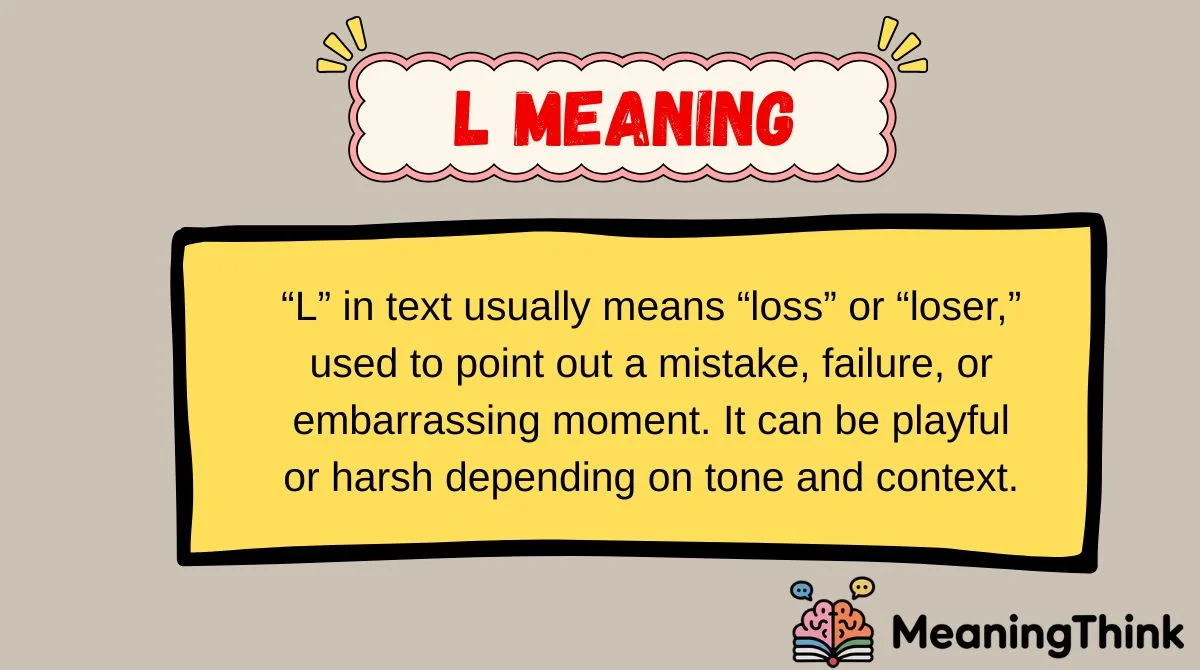
“L” in text usually means “loss” or “loser,” used to point out a mistake, failure, or embarrassing moment. It can be playful or harsh depending on tone and context.
Secondary meanings include mild teasing among friends, sarcastic reactions, or shorthand for disappointment.
Detailed Meaning Breakdown
Primary Meaning
The main meaning of “L” comes from the word loss. In online slang, especially in gaming and social media, people say “take the L” when someone fails or loses.
When someone sends just “L,” they are usually pointing out that you made a mistake or had a bad outcome.
Example:
- You: “I studied all night and still failed.”
- Friend: “L”
Here, it highlights your loss—sometimes jokingly, sometimes bluntly.
Secondary Meanings
- Playful teasing
Among friends, “L” can be light humor. It doesn’t always mean harm. - Sarcastic reaction
It can be used when something obviously went wrong. - Group humor or meme culture
In online communities, people spam “L” to react collectively to a failure.
Rare Meanings
- In rare cases, “L” might just mean the letter itself (like grading or labeling), but in texting slang, this is uncommon.
- It can also be part of phrases like “W or L” (win or loss).
What “L” Means in Different Situations
Everyday Texting
In casual chats, “L” often signals a small failure or awkward moment.
Example:
- “I dropped my phone again.”
- “L 😭”
Tone matters here. With emojis, it feels softer and more friendly.
Social Media Platforms
On platforms like TikTok, X (Twitter), or Instagram:
- “L” is often used publicly
- It can be harsher
- Sometimes used to mock people
Example:
- Someone posts a bad opinion
- Replies: “L take”
This means people disagree strongly.
Dating & Relationships
In dating contexts, “L” can be risky.
Example:
- “She left me on read.”
- “That’s an L”
Here it may feel insensitive unless used between close friends.
Using “L” directly toward a partner can seem dismissive or rude.
Professional Communication
In work settings, “L” should be avoided.
It can:
- Sound disrespectful
- Damage credibility
- Create misunderstandings
Example:
- Boss: “We missed the deadline.”
- Reply: “L”
This would be inappropriate.
Cultural or Regional Differences
- In Western internet culture, “L” is widely understood.
- In some regions, people may not recognize it or may find it confusing.
- Younger audiences use it more than older generations.
Psychological & Tone Analysis
Why People Use It
- Saves time (one letter instead of a full sentence)
- Fits fast-paced communication
- Matches meme culture
What It Signals Socially
- Confidence or dominance
- Humor or sarcasm
- Group belonging (especially in online communities)
Emotional Layer Behind It
“L” can carry different emotional tones:
- Light teasing → Friendly
- Dry response → Neutral
- Harsh use → Judgmental
The difference depends on:
- Relationship
- Context
- Tone (emoji vs no emoji)
15 Real Conversation Examples (Explained)
- “I forgot my wallet at home.”
“L”
→ Mild teasing about a mistake. - “My team lost 5–0.”
“Big L”
→ Emphasizes a major loss. - “She rejected me.”
“L bro”
→ Casual, slightly supportive but still blunt. - “I just spilled coffee on my laptop.”
“L 😭”
→ Sympathetic tone with humor. - “I passed the exam.”
“W!”
→ Opposite of L (win). - “I missed the train.”
“That’s an L”
→ Statement of bad luck. - “I sent the message to the wrong person.”
“L moment”
→ Highlights embarrassment. - “He thinks pineapple belongs on pizza.”
“L take”
→ Disagrees with opinion. - “I lost my keys again.”
“Another L”
→ Repeated mistakes. - “I stayed up all night gaming.”
“L decision”
→ Critiques a choice. - “My phone died during the call.”
“L 😅”
→ Light, friendly tone. - “I got ghosted.”
“That’s tough… L”
→ Mix of sympathy and slang. - “I forgot her birthday.”
“Huge L”
→ Serious mistake. - “I tripped in public.”
“L moment 💀”
→ Humor about embarrassment. - “I invested in the wrong stock.”
“Financial L”
→ Context-specific loss.
When “L” Can Be Misunderstood
Context Confusion
Without tone or emojis, “L” can seem rude or dismissive.
Generational Gap
- Younger users understand it easily
- Older users may not recognize it or may find it offensive
Platform Differences
- On TikTok or X → More aggressive use
- In private chats → Often softer
Similar Words, Symbols, or Abbreviations
- W – Win or success
- LOL – Laughing out loud
- SMH – Shaking my head
- BRUH – Reaction to something silly or surprising
- FAIL – Clear failure
- Oof – Reaction to something painful or awkward
- Rip – Expresses sympathy or loss
- Yikes – Shows discomfort or concern
- Clown – Suggests foolish behavior
- Cringe – Something embarrassing or awkward
When Not to Use “L”
Professional Risks
Avoid using “L” in:
- Emails
- Work chats
- Client communication
It can damage your reputation.
Cultural Risks
Not everyone understands slang. Using it in mixed audiences can confuse people.
Tone Risks
“L” can:
- Sound cold
- Seem disrespectful
- Hurt feelings if used carelessly
Especially risky in serious conversations.
Expert Tips for Using “L” Correctly
- Know your audience
Use it only with people who understand slang. - Add emojis for softer tone
“L 😅” feels less harsh than “L”. - Avoid serious situations
Don’t use it when someone is upset. - Use it sparingly
Overuse can make you seem immature. - Match the tone of the conversation
If others are casual, it fits. If formal, avoid it. - Don’t use it in arguments
It can escalate conflict. - Use phrases for clarity
“That’s an L” is clearer than just “L”. - Be mindful of relationships
Close friends = safer
New contacts = risky
FAQs
What does “L” mean in texting?
It usually means “loss” or “loser,” pointing out a mistake or failure in a casual or humorous way.
Is “L” always negative?
Mostly yes, but it can be playful depending on tone and relationship.
What is the opposite of “L”?
The opposite is “W,” which stands for “win.”
What does “take the L” mean?
It means to accept a loss or admit you were wrong.
Is it rude to send just “L”?
It can be, especially without context or emojis. It may feel dismissive.
Do adults use “L” in text?
Some do, but it’s more common among younger people.
Can “L” be used in professional chats?
No, it’s not appropriate for formal or work communication.
What does “L take” mean?
It means someone’s opinion is bad or unpopular.
Final Summary
“L” is a simple but powerful piece of modern slang. At its core, it means “loss,” but its tone can shift from playful to harsh depending on how it’s used.
In casual conversations with friends, it can add humor and personality. On public platforms, it can be more aggressive. In professional or sensitive situations, it’s best avoided altogether.
The key to using “L” correctly is awareness. Pay attention to context, tone, and audience. When used thoughtfully, it can make communication quicker and more expressive. When used carelessly, it can create confusion or tension.
Use it smartly, and you’ll stay in control of how your message is understood.