You open your phone and see a message: “wydd?”
No punctuation. No context. Just four letters.
Are they asking what you’re doing? Are they starting a conversation? Or is it something else entirely?
This small abbreviation has become common in texting, social media, and online chats—but many people still feel unsure about what it really means, when to use it, and how to respond.
The confusion grows because tone, intent, and meaning can change depending on who sends it and where it appears. A simple “wydd” can be casual, friendly, flirty, or even awkward if used incorrectly.
This guide breaks it all down clearly. You’ll learn the exact meaning, how it’s used in different situations, real examples, and expert tips so you can understand—and use—“wydd” confidently in 2026.
Quick Definition of “wydd”
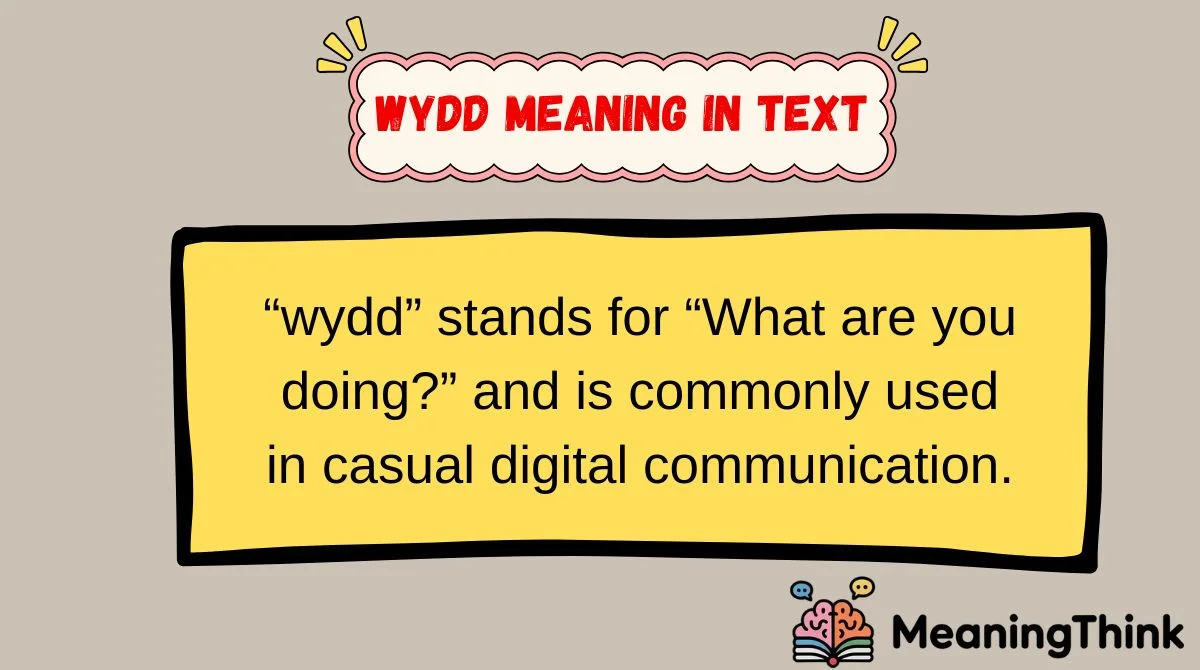
“wydd” stands for “What are you doing?” and is commonly used in casual digital communication.
It’s a short, informal way to check what someone is currently doing or to start a conversation. In some cases, it can also imply interest in hanging out or continuing a chat.
Detailed Meaning Breakdown
Primary Meaning
At its core, “wydd” simply means:
“What are you doing right now?”
It’s typically used:
- To start a conversation
- To check someone’s availability
- To show casual interest in someone’s activity
Example:
“Hey, wydd?” → “Hey, what are you doing?”
Secondary Meanings
Depending on context, “wydd” can also mean:
- “Are you free?”
(Indirect way of asking availability) - “Do you want to talk or hang out?”
(Often used socially or casually) - “What’s going on with you?”
(Broader, more open-ended tone)
Rare Meanings
In rare situations, tone can shift:
- Checking interest level (especially in dating)
- Testing responsiveness (if conversation has slowed)
These meanings depend heavily on context and relationship.
What “wydd” Means in Different Situations
Everyday Texting
In daily texting, “wydd” is simple and casual.
- Used between friends
- No pressure attached
- Often just a conversation starter
Example:
“wyd?” → “Nothing much, just chilling.”
Social Media Platforms
On platforms like Instagram, Snapchat, or messaging apps:
- Used in DMs to initiate chat
- Often replaces longer sentences
- Common among younger users
It may also feel slightly more informal or spontaneous here.
Dating & Relationships
In dating, “wydd” can carry more meaning.
- May signal interest in talking
- Could hint at wanting to meet
- Sometimes used as a low-effort opener
Example:
“wydd tonight?” → Could mean “Want to hang out?”
Professional Communication
In professional settings, “wydd” is generally not appropriate.
- Too informal
- Lacks clarity
- May appear careless
Better alternative:
“What are you working on right now?” or “Are you available?”
Cultural or Regional Differences
While widely used in English-speaking digital culture:
- Younger users use it more often
- Older users may find it confusing
- Some regions prefer “wyd” (without double “d”)
Both “wyd” and “wydd” are understood similarly.
Psychological & Tone Analysis
Why People Use It
People use “wydd” because it is:
- Fast to type
- Casual and low-pressure
- Easy conversation starter
It removes formality and creates a relaxed tone.
What It Signals Socially
Using “wydd” often signals:
- Familiarity
- Informality
- Openness to conversation
It suggests the sender is comfortable with you.
Emotional Layer Behind It
Depending on context, it can carry subtle emotions:
- Curiosity → “What are you up to?”
- Interest → “I want to talk to you”
- Boredom → “Let’s chat”
- Loneliness → “I need company”
Tone is shaped by timing, relationship, and wording.
15 Real Conversation Examples (Explained)
- “Hey, wydd?”
→ Basic conversation starter. - “wydd rn?”
→ Asking what you’re doing right now. - “yo wydd tonight?”
→ Suggesting plans or hangout. - “wydd bro”
→ Casual check-in with a friend. - “heyy, wydd 😊”
→ Slightly friendly or flirty tone. - “wyd” (no reply after hours)
→ May signal low effort or disinterest. - “wyd, wanna call?”
→ Direct transition into action. - “wyd this weekend?”
→ Planning ahead. - “wyd or busy?”
→ Checking availability more clearly. - “wyd lol”
→ Light, playful tone. - “wyd???”
→ Urgent or impatient tone. - “wyd…?”
→ Can feel hesitant or uncertain. - “wyd I’m bored”
→ Clearly seeking interaction. - “wyd with them?”
→ Asking about specific situation. - “wyd, miss you”
→ Emotional and affectionate.
When “wydd” Can Be Misunderstood
Context Confusion
Without context, it can feel:
- Too vague
- Low effort
- Unclear in intention
Generational Gap
- Younger users: normal and common
- Older users: may find it lazy or confusing
Platform Differences
- Snapchat/DMs: casual and expected
- Email/Work chat: inappropriate
Similar Words, Symbols, or Abbreviations
- wyd – Same meaning, more common spelling
- sup – Short for “what’s up?”
- hbu – “How about you?”
- wyd rn – “What are you doing right now?”
- wya – “Where you at?”
- brb – “Be right back”
- idk – “I don’t know”
- ttyl – “Talk to you later”
- nm – “Not much”
- wyd later – Asking about future plans
When Not to Use “wydd”
Professional Risks
Avoid in:
- Emails
- Work chats
- Formal communication
It may appear unprofessional.
Cultural Risks
Some people may:
- Not understand it
- Find it too casual
Always consider your audience.
Tone Risks
“wydd” can seem:
- Lazy
- Disinterested
- Too brief
Especially if overused.
Expert Tips for Using “wydd” Correctly
- Use it only in casual conversations
Stick to friends or informal chats. - Add context when needed
Example: “wydd tonight?” is clearer than “wydd” - Match the other person’s tone
If they text formally, avoid slang. - Avoid overusing it
Repetition can feel low-effort. - Pair it with emotion when needed
Example: “heyy wydd 😊” feels warmer. - Don’t rely on it alone in important chats
Be clear when clarity matters. - Use proper timing
Late-night “wydd” may imply different intent. - Upgrade when necessary
Switch to full sentences in serious discussions.
FAQs
What does “wydd” mean in texting?
It means “What are you doing?” and is used to start casual conversations.
Is “wydd” the same as “wyd”?
Yes, both mean the same thing. “wyd” is more common, while “wydd” is just a variation.
Is “wydd” rude?
No, but it can feel lazy or too casual depending on the situation.
Can I use “wydd” in professional chats?
No, it’s not suitable for formal or professional communication.
What should I reply to “wydd”?
You can simply say what you’re doing, like “Just relaxing” or “Working right now.”
Is “wydd” used in dating?
Yes, often as a casual opener or to suggest talking or meeting.
Why do people send just “wydd”?
It’s a quick, low-effort way to start a conversation.
Does “wydd” mean someone likes you?
Not necessarily, but it can indicate interest depending on context.
Final Summary
“wydd” is a simple, modern texting shortcut that means “What are you doing?” It’s widely used in casual conversations to start chats, check availability, or show interest.
Its meaning is straightforward, but its tone depends heavily on context, relationship, and timing. Used correctly, it feels natural and friendly. Used poorly, it can seem lazy or unclear.
The key is balance:
- Use it casually
- Add context when needed
- Match tone with the other person
Understanding small phrases like “wydd” helps you communicate more naturally in today’s digital world. When used thoughtfully, even a four-letter message can start meaningful conversations.