You’re texting a friend, and they reply with “im tired.” No apostrophe. No capital letter. Just “im.” You pause for a second—what exactly does that mean? Is it just lazy typing, or does it carry a different tone?
In today’s fast-moving digital world, small details like “im” instead of “I’m” can change how a message feels.
People type quickly, skip punctuation, and rely on shorthand—but that doesn’t mean the meaning is always obvious.
This guide clears up all confusion around “im.” You’ll learn what it means, how people use it in different situations, what tone it gives off, and when it might cause misunderstandings.
By the end, you’ll know exactly how to read and use “im” with confidence in any conversation.
Quick Definition of “im”
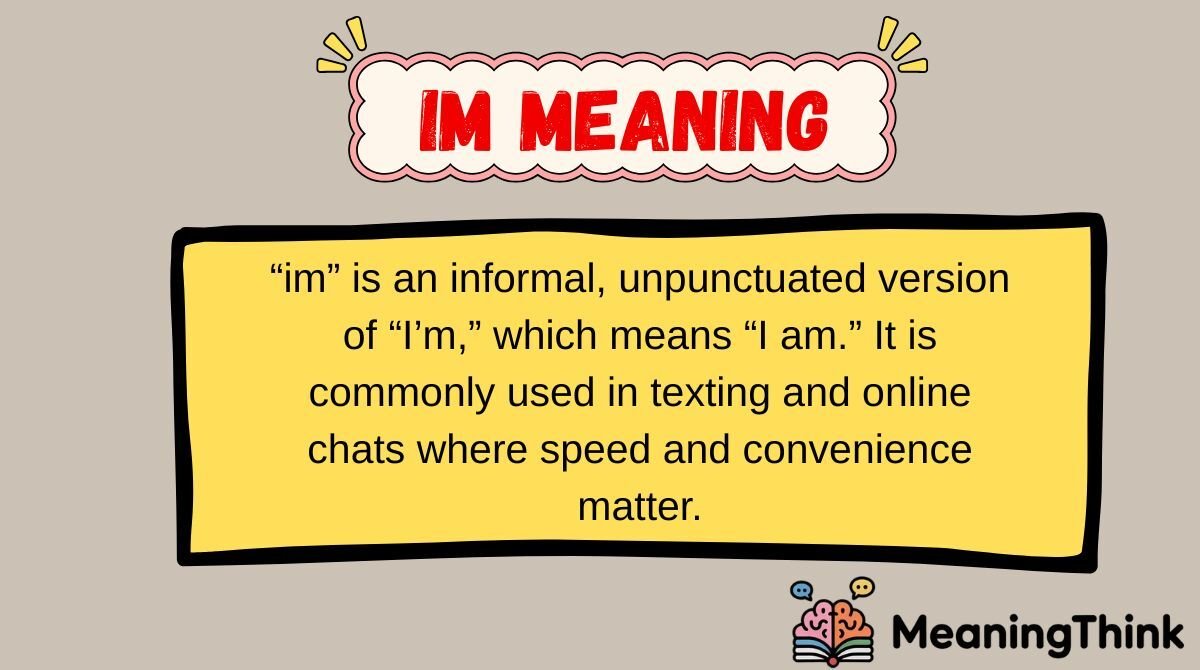
“im” is an informal, unpunctuated version of “I’m,” which means “I am.” It is commonly used in texting and online chats where speed and convenience matter.
It can also signal a casual tone, relaxed attitude, or fast typing. In rare cases, it may reflect carelessness or stylistic choice.
Detailed Meaning Breakdown
Primary Meaning
At its core, “im” simply means “I am.”
Example:
- “im hungry” → “I am hungry”
The apostrophe is dropped, but the meaning remains unchanged.
Secondary Meanings
While the definition is simple, tone and intent can vary:
- Casual tone: Shows relaxed, friendly communication
- Speed typing: Used when someone is typing quickly
- Minimal effort: Sometimes signals low effort or urgency
- Digital habit: Common among frequent texters who skip punctuation
Rare Meanings
In some contexts, “IM” (uppercase) can mean:
- Instant Messaging (older usage in tech contexts)
- Example: “Send me an IM later”
However, lowercase “im” in modern texting almost always means “I’m.”
What “im” Means in Different Situations
Everyday Texting
In daily chats, “im” is extremely common and usually harmless.
Example:
- “im on my way” → quick, casual update
- “im bored” → relaxed expression
It signals comfort and familiarity between people.
Social Media Platforms
On platforms like messaging apps, comments, or DMs:
- “im” reflects informal digital culture
- It blends with slang and abbreviations
Example:
- “im dead 😂” → exaggerated humor
- “im obsessed with this” → strong enthusiasm
Dating & Relationships
Here, tone matters more.
- “im thinking about you” → soft and genuine
- “im fine” → could feel distant or dismissive
Without punctuation, emotional clarity can drop.
Professional Communication
Using “im” in work settings can be risky.
- “im sending the report” → may appear unprofessional
- “I’m sending the report” → more polished and appropriate
In formal contexts, punctuation matters.
Cultural or Regional Differences
- Younger users use “im” more often
- Older generations may see it as incorrect
- In global communication, it may confuse non-native speakers
Psychological & Tone Analysis
Why People Use It
- Speed: Faster than typing “I’m”
- Habit: Common in mobile typing
- Informality: Matches casual conversation style
What It Signals Socially
- Relaxed personality
- Digital fluency
- Comfort with the recipient
But sometimes:
- Lack of attention to detail
- Low emotional investment
Emotional Layer Behind It
“im” can subtly affect tone:
- “I’m sorry” → feels sincere
- “im sorry” → may feel rushed or less serious
Even small punctuation changes can shape emotional impact.
15 Real Conversation Examples (Explained)
- “im tired”
→ Simple, casual expression of feeling tired - “im coming now”
→ Quick update, informal tone - “im not sure”
→ Uncertainty, neutral tone - “im so happy for you”
→ Positive, but slightly less formal - “im done with this”
→ Frustration, possibly emotional - “im at home”
→ Basic location update - “im sorry”
→ Apology, but may feel less serious than “I’m sorry” - “im dead 😂”
→ Slang for extreme laughter - “im busy rn”
→ Quick response, low effort - “im thinking…”
→ Suggests pause or consideration - “im fine”
→ Could be neutral—or hiding emotion - “im excited!”
→ Positive energy, casual - “im late sorry”
→ Rushed message, urgency - “im confused”
→ Direct expression of misunderstanding - “im trying my best”
→ Emotional honesty, slightly softened by casual style
When “im” Can Be Misunderstood
Context Confusion
Without punctuation, tone can be unclear:
- “im fine” → okay or upset?
- “im sorry” → sincere or rushed?
Generational Gap
- Younger users: normal and natural
- Older users: may see it as careless
Platform Differences
- Text messages: acceptable
- Emails: unprofessional
- Public posts: depends on audience
Similar Words, Symbols, or Abbreviations
- I’m – Proper contraction of “I am”
- imma – Slang for “I am going to”
- idk – I don’t know
- imo – In my opinion
- ikr – I know, right
- rn – Right now
- brb – Be right back
- lol – Laughing out loud
- tbh – To be honest
- smh – Shaking my head
Each serves a similar purpose: fast, informal communication.
When Not to Use “im”
Professional Risks
Avoid in:
- Emails
- Reports
- Job applications
It may reduce credibility.
Cultural Risks
In formal cultures or international settings:
- May appear disrespectful
- Can confuse non-native readers
Tone Risks
In serious conversations:
- Apologies
- Emotional discussions
Using “im” may weaken sincerity.
Expert Tips for Using “im” Correctly
- Match the context
Use “im” only in casual conversations - Know your audience
Friends = okay
Boss = avoid - Use proper form when needed
Switch to “I’m” in formal writing - Be careful with emotions
Use full punctuation for serious messages - Don’t overuse it
Mix with proper grammar when needed - Watch tone clarity
Add emojis or extra words if needed - Stay consistent
Avoid switching styles randomly - Proofread important messages
Small details matter in key situations
FAQs
What does “im” mean in texting?
It means “I am.” It’s a shortened, informal version used in casual digital conversations.
Is “im” correct grammar?
No, it’s not grammatically correct. The proper form is “I’m,” but “im” is widely accepted in informal texting.
Why do people type “im” instead of “I’m”?
Mostly for speed, convenience, and habit when typing quickly on phones.
Is “im” rude or lazy?
Not usually. It depends on context. In casual chats, it’s normal. In formal settings, it can seem careless.
Can I use “im” in emails?
It’s best not to. Use “I’m” for professionalism.
Does “im” change the meaning of a sentence?
No, but it can change the tone—making it feel more casual or less serious.
Is “im” used worldwide?
Yes, especially among younger users, but understanding may vary across cultures.
What’s the difference between “im” and “IM”?
“im” means “I’m,” while “IM” can stand for “Instant Messaging” in older or technical contexts.
Final Summary
“im” is a simple but powerful example of how digital communication evolves. It means “I am,” but carries more than just definition—it reflects tone, speed, and social context.
Use it when:
- You’re texting friends
- You want a relaxed tone
- Speed matters
Avoid it when:
- Writing professionally
- Expressing deep emotions
- Communicating across formal or cultural boundaries
Mastering small details like this helps you communicate clearly, confidently, and appropriately in every situation. The key is not just knowing what “im” means—but knowing when and how to use it.