You’re chatting with a friend, and they suddenly reply with “yay!” You pause for a second. Are they genuinely excited, or just being polite? Maybe someone texts “yay…” with dots—now it feels completely different.
This small, simple word can carry a wide range of meanings depending on tone, context, and even punctuation.
In today’s fast-paced digital communication, short expressions like “yay” are everywhere. From casual texting to social media comments, it’s used to express emotions quickly—but not always clearly. That’s where confusion begins.
This guide breaks everything down in a simple, practical way. You’ll learn exactly what “yay” means, how it’s used in different situations, what it signals emotionally, and how to avoid misunderstandings. By the end, you’ll know when to use it confidently—and when to avoid it.
Quick Definition of “yay meaning in text”
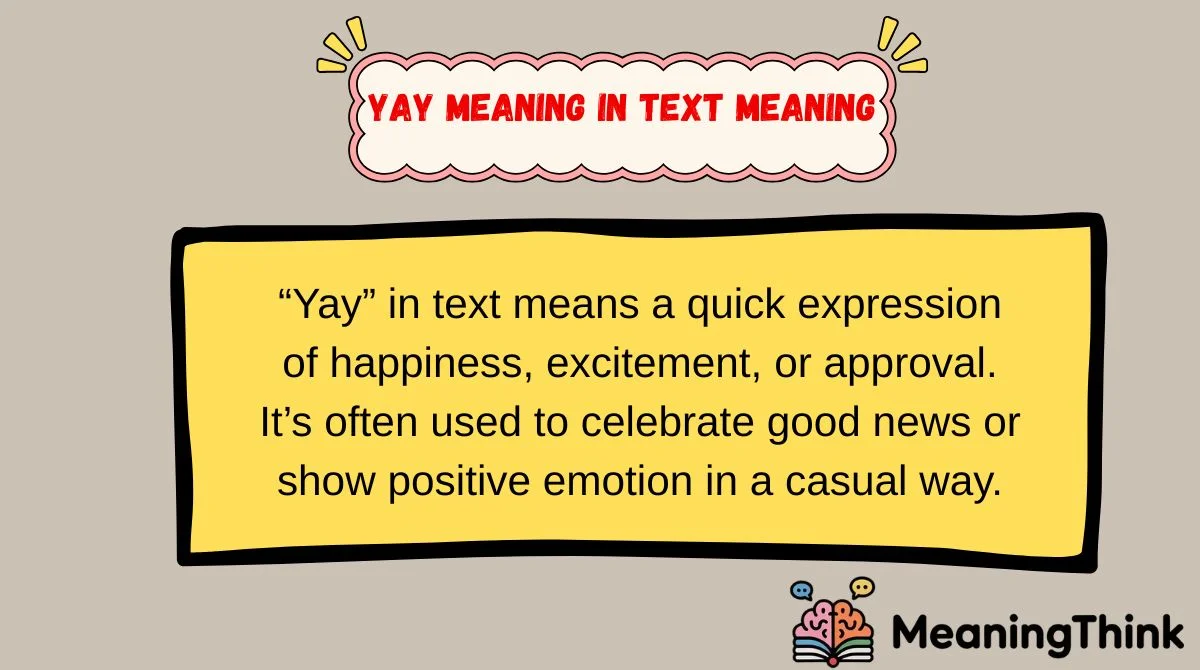
“Yay” in text means a quick expression of happiness, excitement, or approval. It’s often used to celebrate good news or show positive emotion in a casual way.
It can also carry softer meanings like polite agreement, mild enthusiasm, or even sarcasm depending on tone and context.
Detailed Meaning Breakdown
Primary Meaning
At its core, “yay” is an expression of joy or excitement. It’s similar to saying:
- “That’s great!”
- “Awesome!”
- “I’m happy!”
People use it to react positively in conversations, especially in informal settings.
Example:
“Guess what? I got the job!”
“Yay! That’s amazing!”
Here, it clearly shows genuine excitement.
Secondary Meanings
“Yay” can shift meaning based on tone, punctuation, and context:
- Polite enthusiasm: Showing support even if excitement is low
“We have a meeting tomorrow.”
“Yay…” - Relief: Something stressful is over
“Exams are finally done.”
“Yay!” - Agreement: Accepting something casually
“Pizza tonight?”
“Yay!”
Rare Meanings
Less commonly, “yay” can be:
- Sarcastic (especially with ellipses or lowercase tone)
“More homework… yay.” - Dry humor
Used intentionally to sound flat or ironic
What “yay meaning in text” Means in Different Situations
Everyday Texting
In daily chats, “yay” is friendly and positive. It’s often used to react quickly without typing a full sentence.
- Expresses happiness
- Keeps conversation light
- Shows engagement
Example:
“I’ll come visit this weekend.”
“Yay! Can’t wait!”
Social Media Platforms
On platforms like Instagram, TikTok, or X:
- Used in captions and comments
- Signals excitement or celebration
- Often paired with emojis (🎉😊)
Example:
“Finally finished my project! Yay!”
Dating & Relationships
In romantic or casual relationships, tone matters more.
- “Yay!” = genuine excitement
- “yay” = mild interest
- “yay…” = hesitation or lack of enthusiasm
Example:
“Let’s meet tomorrow?”
“yay…” → could signal uncertainty
Professional Communication
“Yay” is rarely appropriate in formal work settings.
- Acceptable in casual team chats
- Not suitable for emails or formal messages
Example:
Casual Slack: “Project approved!” → “Yay!”
Formal email: Avoid using it
Cultural or Regional Differences
“Yay” is widely understood in English-speaking contexts, but:
- Some cultures may find it too informal
- Tone may not translate well globally
- Non-native speakers may interpret it literally as strong excitement
Psychological & Tone Analysis
Why People Use It
People use “yay” because it is:
- Quick and effortless
- Emotionally expressive
- Socially positive
It reduces effort while still showing reaction.
What It Signals Socially
“Yay” can signal:
- Support
- Approval
- Participation in the conversation
It helps maintain social bonding without deep engagement.
Emotional Layer Behind It
The emotional intensity of “yay” depends on:
- Capitalization: “YAY!” = high excitement
- Punctuation: “yay…” = low excitement
- Context: Determines sincerity
It’s a flexible emotional tool, not a fixed expression.
15 Real Conversation Examples (Explained)
- “I passed my exam!”
“Yay!”
→ Genuine happiness and celebration - “We’re going out tonight.”
“yay”
→ Mild excitement - “Meeting got canceled.”
“Yay!!”
→ Strong relief and excitement - “You have extra work this weekend.”
“yay…”
→ Sarcasm or disappointment - “I got you a gift.”
“Yay 😊”
→ Warm appreciation - “Let’s wake up early tomorrow.”
“yay”
→ Neutral agreement - “Vacation starts tomorrow!”
“YAY!!!”
→ High excitement - “We need to talk later.”
“yay…”
→ Anxiety or reluctance - “Free food in the office.”
“Yay!”
→ Positive reaction - “Movie night?”
“yay!”
→ Happy agreement - “Another meeting added.”
“yay…”
→ Frustration disguised as sarcasm - “I’ll call you later.”
“yay”
→ Polite acknowledgment - “We’re moving to a new house!”
“Yay! That’s awesome!”
→ Strong support - “You need to redo the task.”
“yay…”
→ Annoyance - “You’re invited!”
“Yay 😊”
→ Gratitude and excitement
When “yay meaning in text” Can Be Misunderstood
Context Confusion
Without tone of voice, “yay” can be unclear:
- Is it real excitement?
- Or just politeness?
Generational Gap
- Younger users: flexible use, including sarcasm
- Older users: may interpret it as always positive
Platform Differences
- Text messages: tone depends on punctuation
- Social media: usually positive
- Work chats: may seem unprofessional
Similar Words, Symbols, or Abbreviations
- Yayyy – Extended excitement
- Woohoo – Energetic celebration
- Yippee – Playful happiness
- Nice – Casual approval
- Great – Standard positive response
- Awesome – Strong enthusiasm
- Cool – Relaxed approval
- 👍 – Agreement or approval
- 🎉 – Celebration symbol
- LOL – Sometimes used to soften tone
When Not to Use “yay meaning in text”
Professional Risks
Avoid in:
- Job emails
- Formal communication
- Client interactions
It may appear immature or unprofessional.
Cultural Risks
- May seem too casual in formal cultures
- Could be misunderstood by non-native speakers
Tone Risks
Using “yay” incorrectly can:
- Sound sarcastic unintentionally
- Appear uninterested
- Send mixed signals
Example:
“yay…” might hurt someone’s feelings if they expected excitement.
Expert Tips for Using “yay” Correctly
- Match the tone to the situation
Use more enthusiasm for big news - Use punctuation wisely
“Yay!” vs “yay…” changes everything - Add emojis for clarity
Helps avoid misunderstanding - Avoid in formal settings
Keep it casual only - Consider your relationship
Close friends vs professional contacts - Be mindful of sarcasm
It may not translate well in text - Adjust capitalization
“YAY” = strong emotion, “yay” = soft tone - Combine with words when needed
“Yay! That’s great!” adds clarity
FAQs
What does “yay” mean in texting?
It means happiness, excitement, or approval. The exact tone depends on context and punctuation.
Is “yay” always positive?
No. It can be sarcastic or neutral depending on how it’s written, especially with “…” or lowercase.
What’s the difference between “yay” and “YAY”?
“YAY” shows stronger excitement, while “yay” is softer or more casual.
Can “yay” be rude?
Not usually, but it can seem sarcastic or dismissive if used incorrectly.
Is “yay” appropriate for work messages?
Only in very casual team chats. Avoid it in formal communication.
What does “yay…” mean in text?
It often signals sarcasm, hesitation, or lack of enthusiasm.
Why do people use “yay” instead of full sentences?
It’s quick, expressive, and keeps conversations light and fast.
How can I make “yay” sound more genuine?
Add punctuation, emojis, or extra words like “Yay! That’s awesome!”
Final Summary
“Yay” is a simple but powerful word in modern texting. It can express excitement, support, agreement, or even sarcasm—all depending on how you use it.
The key is context. Pay attention to punctuation, tone, and the situation. A single exclamation mark can turn mild interest into real excitement, while three dots can flip it into sarcasm.
Use “yay” freely in casual conversations, but avoid it in formal settings. When in doubt, add a few extra words to make your meaning clear.
Mastering small expressions like this helps you communicate more effectively—and avoid confusion in digital conversations.