You’re texting someone, and suddenly they reply with “ht.”
No emojis, no extra words—just two letters. You pause and wonder: What does that even mean? Is it positive? Dismissive? Friendly? Or something else entirely?
Short abbreviations like “ht” are everywhere in modern communication. From casual chats to social media comments, people use them to save time and express tone quickly.
But the problem is that these shortcuts don’t always have one clear meaning. Depending on context, “ht” can mean different things—and misunderstanding it can lead to awkward or confusing conversations.
This guide breaks everything down in a simple, clear way. You’ll learn what “ht” means, how it’s used in real conversations, and how to respond correctly.
Whether you’re chatting with friends, dating, or communicating online, this article will help you understand “ht” with confidence.
Quick Definition of “ht”
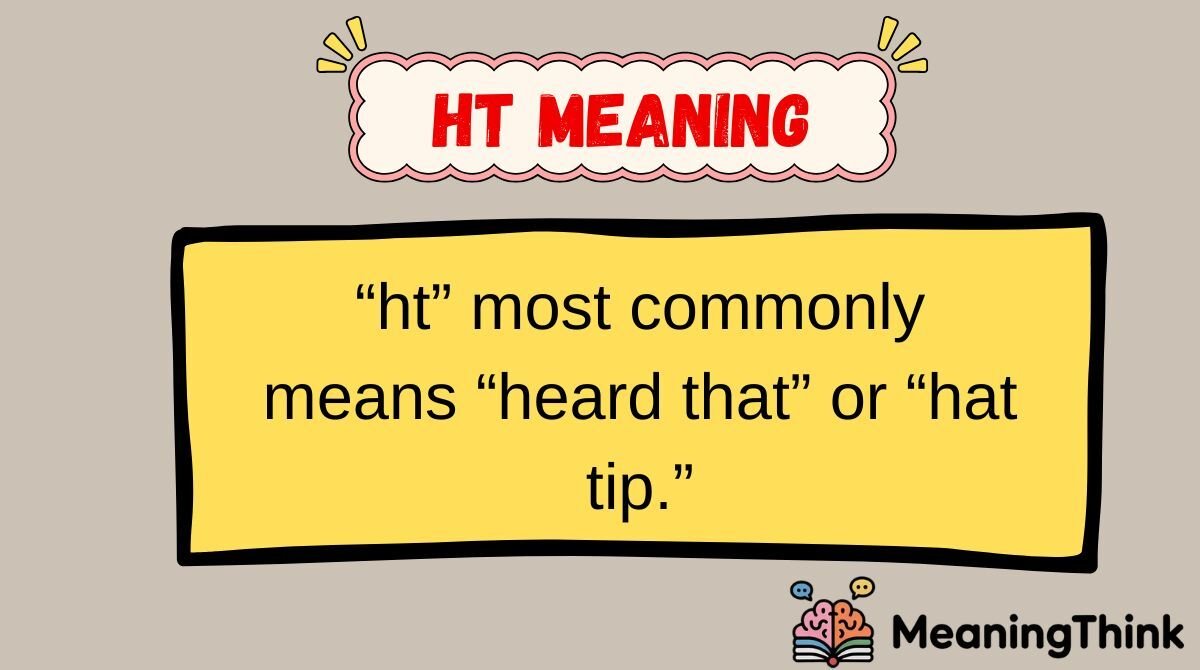
“ht” most commonly means “heard that” or “hat tip.”
In texting, it often signals acknowledgment (like “got it” or “I understand”). On social media, it can also mean giving credit to someone for sharing information. Less commonly, it may carry different meanings depending on context.
Detailed Meaning Breakdown
Primary Meaning: “Heard That”
The most common use of “ht” in texting is shorthand for “heard that.”
It’s used to:
- Acknowledge a message
- Show understanding
- Respond quickly without continuing the conversation
Example:
- “I’ll be late tonight.”
- “ht”
Here, “ht” means: I understand or noted.
Secondary Meaning: “Hat Tip”
On platforms like Twitter (X), blogs, or forums, “ht” often stands for “hat tip.”
This means:
- Giving credit to someone
- Acknowledging where you found information
Example:
- “Interesting article about AI trends (ht @username)”
This shows respect and attribution.
Rare Meanings
In some cases, “ht” may mean:
- “Hold tight” (rare in texting now)
- “Height” (in technical or gaming contexts)
These uses are uncommon and usually depend on specific conversations.
What “ht” Means in Different Situations
Everyday Texting
In daily chats, “ht” usually means:
- “Got it”
- “Okay”
- “I hear you”
It’s often neutral and brief. Sometimes it can feel slightly distant or unemotional.
Social Media Platforms
On platforms like X, Reddit, or blogs:
- “ht” = “hat tip”
- Used to credit sources
Example:
- “Breaking news update (ht @journalist)”
Dating & Relationships
In dating, tone matters a lot.
“ht” can feel:
- Neutral → “I acknowledge what you said”
- Slightly cold → If used instead of a more engaging reply
Example:
- “I miss you”
- “ht”
This may come off as emotionally distant.
Professional Communication
In professional settings:
- “ht” is not recommended
- It can seem unclear or unprofessional
Instead, people use:
- “Noted”
- “Understood”
Cultural or Regional Differences
- Younger users: More likely to use “ht”
- Older users: May not recognize it at all
- Online communities: More familiar with “hat tip” meaning
Psychological & Tone Analysis
Why People Use “ht”
People use “ht” because:
- It’s fast
- It reduces effort
- It keeps conversations minimal
What It Signals Socially
Using “ht” can signal:
- Efficiency
- Lack of emotional investment
- Casual communication style
Emotional Layer Behind It
Tone depends heavily on context:
- Friendly context → neutral acknowledgment
- Serious context → may feel dismissive
- Emotional message → can feel cold
In short, “ht” removes emotional depth, which can be risky in sensitive conversations.
15 Real Conversation Examples (Explained)
“I’ll call you later.”
“ht”
→ Acknowledgment without engagement
“Meeting moved to 3 PM.”
“ht”
→ Professional acknowledgment (informal)
“I passed my exam!”
“ht”
→ Sounds uninterested or cold
“Don’t forget the groceries.”
“ht”
→ Means “I got it”
“I’m feeling down today.”
“ht”
→ Emotionally weak response
“Check this article (ht @user)”
→ Giving credit
“Be careful driving.”
“ht”
→ Neutral acknowledgment
“I love you.”
“ht”
→ Potentially hurtful or dismissive
“Game starts at 7.”
“ht”
→ Simple confirmation
“Did you finish the task?”
“ht”
→ May feel incomplete or unclear
“Send me the file.”
“ht”
→ Means “okay, I will”
“This idea came from @alex (ht)”
→ Credit attribution
“I’ll be offline today.”
“ht”
→ Acknowledged
“We need to talk.”
“ht”
→ Could seem cold or avoidant
“Thanks for helping!”
“ht”
→ Not a warm response
When “ht” Can Be Misunderstood
Context Confusion
Without tone or emotion, “ht” can be:
- Seen as agreement
- Or seen as indifference
Generational Gap
- Younger users understand it
- Older users may feel confused or ignored
Platform Differences
- Texting → acknowledgment
- Social media → credit
Mixing these meanings can cause confusion.
Similar Words, Symbols, or Abbreviations
- OK – Simple acknowledgment
- Got it – Clear understanding
- Noted – Formal acknowledgment
- K – Very short, sometimes rude
- 👍 – Friendly acknowledgment
- Roger – Military-style confirmation
- Copy – Means “understood”
- TY – Thank you
- NP – No problem
- FYI – For your information
When Not to Use “ht”
Professional Risks
- Can appear lazy or unclear
- Not suitable for formal emails
Cultural Risks
- Some people may not understand it
- Can create confusion in global communication
Tone Risks
Avoid using “ht” when:
- Someone shares emotions
- You need to show empathy
- The conversation is serious
Expert Tips for Using “ht” Correctly
- Use it only in casual conversations
- Avoid it in emotional or sensitive topics
- Don’t use it in professional emails
- Add emojis if you want warmth (e.g., “ht 👍”)
- Use full phrases when clarity matters
- Match the other person’s tone
- Avoid overusing it—it can feel repetitive
- Replace it with “got it” when unsure
FAQs
What does “ht” mean in texting?
It usually means “heard that,” showing acknowledgment or understanding.
Is “ht” rude?
Not always, but it can feel cold or dismissive depending on context.
What does “ht” mean on social media?
It typically means “hat tip,” used to give credit to someone.
Can “ht” mean something else?
Rarely, it can mean “hold tight” or “height,” depending on context.
Should I use “ht” in professional messages?
No, it’s better to use clear and formal language like “noted.”
Why do people use “ht” instead of full words?
To save time and keep messages short.
Is “ht” commonly used in 2026?
Yes, but mostly in casual texting and niche online communities.
How should I respond to “ht”?
You can continue the conversation or acknowledge it—it usually doesn’t require a long reply.
Final Summary
“ht” is a short, flexible abbreviation that mainly means “heard that” or “hat tip.”
Its meaning depends heavily on context—texting, social media, or conversation tone all play a role.
While it’s useful for quick replies, it lacks emotional depth. That makes it perfect for simple acknowledgments but risky in meaningful or sensitive conversations.
The smartest way to use “ht” is to:
- Keep it casual
- Use it sparingly
- Avoid it when tone matters
Clear communication always wins. When in doubt, use full words—it helps you sound more human, more thoughtful, and more understood.