You’re scrolling through messages when someone replies with “kks.” You pause. Is it a typo?
A slang term? Something rude? This small, three-letter reply can create big confusion—especially when tone is hard to read in text.
Short forms like this are common in modern messaging. People type fast, skip words, and create their own shorthand. But not every abbreviation is easy to understand. “
kks” is one of those terms that can feel unclear if you’re not familiar with how it’s used.
This guide removes the guesswork. You’ll learn exactly what “kks” means, how it’s used in different situations, what tone it carries, and how to respond correctly.
By the end, you’ll be able to read and use “kks” with full confidence—no second-guessing required.
Quick Definition of “kks”
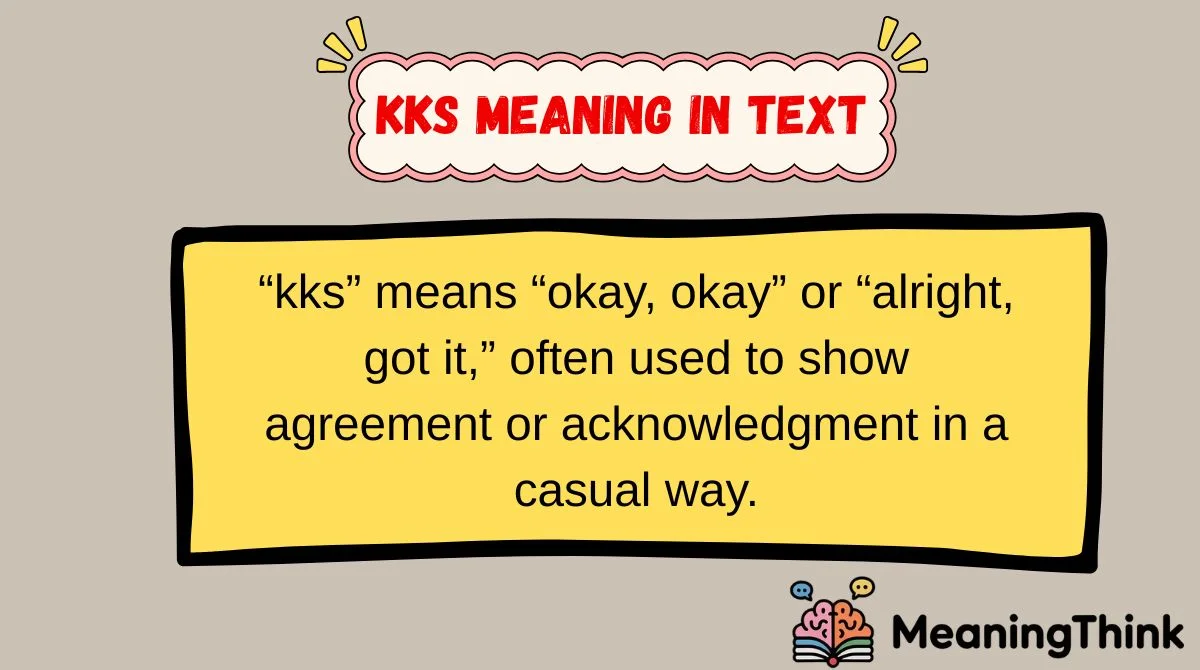
“kks” means “okay, okay” or “alright, got it,” often used to show agreement or acknowledgment in a casual way.
It can also carry tone depending on context—sometimes friendly, sometimes slightly impatient. In rare cases, it may simply be a variation of “kk” (double “k”), meaning confirmation.
Detailed Meaning Breakdown
Primary Meaning
The main meaning of “kks” is simple: acknowledgment. It’s like saying:
- “Okay”
- “Got it”
- “Sure”
The extra “s” doesn’t change the meaning much. It often just adds style, emphasis, or personal texting habit.
Secondary Meanings
Depending on tone and context, “kks” can also mean:
- Slight impatience (“Okay, okay… I heard you”)
- Quick agreement without enthusiasm
- Casual confirmation in fast chats
Rare Meanings
In very rare cases:
- It may be a typo of “kk” or “k”
- Some users use it randomly without specific meaning
KKS Meaning in Power Plant
In the power-generation industry, KKS commonly refers to the Kraftwerk-Kennzeichensystem, a standardized identification system used to label and classify equipment and systems in power plants. The system originated in Germany and is widely known in the energy sector as the Power Plant Identification System. KKS provides structured codes for identifying equipment, systems, components, and locations, making it easier for engineers, operators, and maintenance teams to communicate about specific plant assets. You may see KKS codes on equipment labels, technical drawings, electrical diagrams, control-system screens, maintenance documents, and operating instructions. For example, a KKS code can help identify a particular pump, valve, motor, boiler component, or electrical system within a large facility. This is especially useful in complex power plants, where thousands of components need clear and consistent identification. The exact structure and meaning of a KKS code depend on the individual characters and the plant’s coding scheme. Therefore, KKS is not simply a general abbreviation for one piece of equipment; it is part of a systematic method for organizing and identifying power-plant systems.
What “kks” Means in Different Situations
Everyday Texting
In normal conversations, “kks” is a relaxed way to confirm something.
Example:
- “Meet at 7?”
- “kks”
Meaning: Yes, that works.
Tone: Neutral to friendly.
Social Media Platforms
On apps like messaging platforms or comment threads, “kks” is used for quick replies.
Example:
- “Check your DM”
- “kks”
Meaning: I will.
Tone: Fast, informal.
Dating & Relationships
Here, tone matters more.
- “kks” can feel casual and chill
- But sometimes it may feel dry or uninterested
Example:
- “I miss you”
- “kks”
This might come across as emotionally distant.
Professional Communication
Using “kks” at work is risky.
- It may seem unprofessional
- It can feel dismissive
Better alternatives:
- “Okay, noted”
- “Understood”
Cultural or Regional Differences
In some regions:
- Short replies like “kks” are normal
- In others, they may seem rude
Younger users are more likely to use it casually, while older users may find it confusing or abrupt.
Psychological & Tone Analysis
Why People Use It
People use “kks” because:
- It’s fast
- It requires minimal effort
- It keeps conversations moving
Typing fewer characters saves time, especially in rapid chats.
What It Signals Socially
“Kks” can signal:
- Informality
- Familiarity
- Comfort with the other person
But it can also signal:
- Lack of engagement
- Mild annoyance
- Disinterest (depending on context)
Emotional Layer Behind It
Tone depends on context:
- Friendly: “kks 😊”
- Neutral: “kks”
- Cold: “kks.” (with period)
Small details change how it feels.
15 Real Conversation Examples (Explained)
“Let’s meet at 6”
“kks”
→ Agreement without extra emotion.
“Send me the file”
“kks”
→ Acknowledgment, action implied.
“Don’t forget this time”
“kks”
→ Slight impatience or reassurance.
“I’ll call you later”
“kks”
→ Casual acceptance.
“We need to talk”
“kks”
→ Could feel tense or neutral depending on tone.
“I got the tickets!”
“kks nice!”
→ Positive and engaged.
“Are you coming?”
“kks maybe”
→ Uncertain agreement.
“Please reply faster”
“kks”
→ Could feel slightly annoyed.
“Can you help me?”
“kks sure”
→ Friendly agreement.
“I’m upset”
“kks”
→ Emotionally flat, possibly insensitive.
“Join the meeting now”
“kks joining”
→ Immediate compliance.
“You always do this”
“kks”
→ Defensive or dismissive tone.
“Let’s plan a trip”
“kks sounds good”
→ Positive engagement.
“Did you understand?”
“kks yes”
→ Confirmation.
“I love you”
“kks”
→ May seem cold or uninterested.
When “kks” Can Be Misunderstood
Context Confusion
Without tone or facial expression, “kks” can be read differently:
- Friendly
- Dismissive
- Sarcastic
Generational Gap
- Younger users: see it as normal
- Older users: may see it as rude or unclear
Platform Differences
- Casual chats: acceptable
- Email or formal platforms: inappropriate
Similar Words, Symbols, or Abbreviations
- kk – Okay, understood
- k – Short, sometimes cold “okay”
- ok – Standard acknowledgment
- okayyy – Playful or enthusiastic
- alr – Short for “alright”
- gotcha – I understand
- roger – Confirmation (military style)
- yup – Yes, casual
- sure – Agreement
- noted – Formal acknowledgment
When Not to Use “kks”
Professional Risks
Avoid in:
- Work emails
- Client communication
- Formal messages
It may look careless or unprofessional.
Cultural Risks
Some cultures expect:
- Full sentences
- Polite language
“Kks” may seem disrespectful.
Tone Risks
Avoid when:
- Someone is emotional
- Serious topics are discussed
- You need to show empathy
It can come across as cold.
Expert Tips for Using “kks” Correctly
- Use it only in casual conversations
- Avoid using it in serious discussions
- Add emojis if you want to soften tone
- Pair it with extra words for clarity (“kks sure”)
- Don’t use it with people who may not understand it
- Avoid overusing it—it can seem lazy
- Match the tone of the conversation
- If unsure, use “okay” instead
FAQs
What does “kks” stand for in texting?
It stands for “okay, okay” and is used to show agreement or acknowledgment in a casual way.
Is “kks” rude?
Not always. It depends on tone and context. It can feel rude if used in serious or emotional conversations.
What’s the difference between “kk” and “kks”?
“kk” is standard confirmation, while “kks” adds slight emphasis or stylistic variation.
Can I use “kks” in professional messages?
No, it’s best to avoid it in formal communication.
Why do people use “kks” instead of “okay”?
It’s faster to type and fits casual texting habits.
Does “kks” mean sarcasm?
Sometimes. Tone depends on context and conversation flow.
Is “kks” used worldwide?
It’s more common among younger users and varies by region.
How should I reply to “kks”?
Just continue the conversation. It usually means the person understood you.
KKS Meaning on Snapchat
On Snapchat, KKS does not have one universally recognized meaning, and its interpretation depends heavily on the conversation and the person using it. Snapchat users often create or adopt short abbreviations to communicate quickly, so the same three letters can mean different things in different chats or friend groups. Unlike widely understood Snapchat expressions such as “S” for Snap or “STREAKS,” KKS is not a standard platform feature or universally defined Snapchat abbreviation. It could represent someone’s initials, a nickname, an inside joke, or slang used within a particular online community. If you received “KKS” in a Snapchat message, check the words, emojis, or previous messages around it for clues. The context can often make the intended meaning much easier to understand. If the message still does not make sense, asking the sender directly is the most reliable option. In short, KKS meaning on Snapchat is context-dependent, so it should not automatically be interpreted as one fixed slang term.
Final Summary
“Kks” is a simple but flexible texting shortcut that means “okay” or “got it.” It’s widely used in casual chats for quick replies and smooth conversation flow.
However, its tone can shift easily—from friendly to cold—depending on context.
To use it well:
- Keep it casual
- Be mindful of tone
- Avoid it in serious or professional settings
Understanding small details like this helps you communicate clearly in modern digital conversations. When used correctly, “kks” is a useful tool—not a confusing one.