You’re texting a friend when they suddenly reply with “DSL 😏.” You pause for a second. Is it a compliment? A joke? An insult? Or does it mean something completely different?
Text abbreviations and internet slang change quickly, and many acronyms have more than one meaning.
That makes conversations confusing, especially when the same three letters can mean one thing in a meme, something else in a dating app, and something entirely different in a professional discussion.
If you’ve been wondering about the DSL meaning in text, you’re in the right place. This guide explains what DSL commonly means in texting, social media, online chats, dating conversations, and other digital communication.
You’ll also learn about its secondary meanings, how context changes its interpretation, common misunderstandings, and real conversation examples that show exactly how people use it today.
By the end of this guide, you’ll be able to recognize DSL instantly and understand whether it’s being used as a compliment, a joke, a technical term, or something else entirely.
Quick Definition of “DSL”
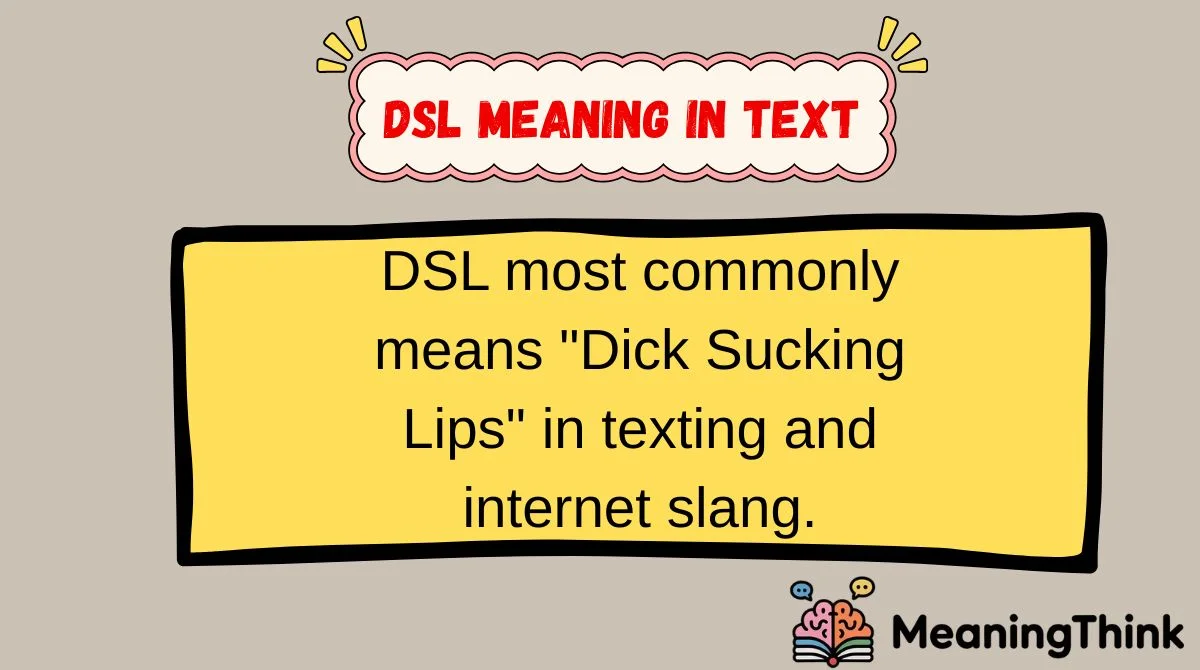
DSL most commonly means “Dick Sucking Lips” in texting and internet slang. It is a slang expression used to describe someone with naturally full or pouty lips, usually in a flirtatious, humorous, or suggestive way.
Outside of texting, DSL can also stand for Digital Subscriber Line, a type of internet connection, or several industry-specific abbreviations depending on the conversation. The intended meaning always depends on the context.
Detailed Meaning Breakdown
Primary Meaning: Dick Sucking Lips
In modern texting, social media, and online slang, DSL is most often used as a playful or provocative way to describe someone with full, attractive lips.
The phrase is intentionally bold and carries a sexual implication. While it may be used jokingly among close friends, it is also commonly used in flirting or commenting on someone’s appearance.
For example:
“She has DSL.”
This usually means the speaker thinks the person has noticeably full lips.
Because of its suggestive nature, DSL should only be used in casual conversations where everyone is comfortable with that type of humor.
Why It Became Popular
The slang version of DSL became popular through:
- Internet forums
- Hip-hop culture
- Meme pages
- Online dating
- Twitter/X
- TikTok comments
- Instagram captions
Today, it remains recognizable across many online communities, although it is considered mature slang.
Secondary Meaning: Digital Subscriber Line
Before becoming popular as internet slang, DSL was already a well-known technology abbreviation.
Digital Subscriber Line (DSL) is a broadband internet technology that provides internet service through traditional telephone lines.
Example:
“Our house still uses DSL internet.”
In this case, the conversation has nothing to do with texting slang.
Technology discussions almost always use this meaning.
Other Possible Meanings
Although uncommon in everyday texting, DSL can also refer to:
- Domain-Specific Language (programming)
- Data Specification Language
- Digital Service Layer
- Decision Support Logic
- Dynamic Systems Laboratory
These meanings appear mainly in technical, academic, or professional environments.
Whenever you see DSL outside casual conversations, look at the surrounding topic before deciding what it means.
What “DSL” Means in Different Situations
Everyday Texting
Among friends, DSL usually refers to someone’s lips.
Examples include:
- Giving a compliment
- Teasing someone
- Making a joke
- Flirting
- Reacting to a selfie
Example:
Alex: “Did you see Emma’s new picture?”
Chris: “Yeah… total DSL.”
Chris is commenting on Emma’s full lips.
Social Media Platforms
On platforms like Instagram, TikTok, Snapchat, and X, DSL often appears in:
- Comment sections
- Meme captions
- Reaction posts
- Viral videos
- Selfie comments
Someone may comment:
“Those DSL though 😭”
This usually means they noticed someone’s lips and are making a humorous or flirtatious observation.
Because social media encourages short comments, DSL is often used without any explanation.
Dating & Relationships
Dating apps and private chats are where the slang meaning appears most frequently.
Someone might say:
- “You definitely have DSL.”
- “Those are some serious DSL.”
- “Your lips are beautiful.”
The first two are slang versions of the third statement.
Although some people see it as a compliment, others may find it too sexual or disrespectful, especially if they don’t know the sender well.
Always consider your relationship with the other person before using the term.
Professional Communication
In work emails, business chats, or office meetings, DSL almost always means Digital Subscriber Line or another technical abbreviation.
For example:
“Our DSL service needs upgrading.”
Nobody in a professional workplace would reasonably assume the slang meaning unless the conversation is clearly informal.
Using the slang definition in professional settings is inappropriate and can create an uncomfortable situation.
Cultural or Regional Differences
The slang meaning of DSL is widely recognized in English-speaking countries, including:
- United States
- Canada
- United Kingdom
- Australia
- New Zealand
However, awareness varies by age and internet culture.
Older adults may immediately think of internet technology.
Younger internet users are much more likely to recognize the slang meaning first.
People whose first language is not English may know only the technical definition unless they spend time on social media.
Psychological & Tone Analysis
Language isn’t only about definitions—it also communicates emotions, personality, and social intent. DSL is a great example of this.
Why People Use DSL
People often use DSL because it is:
- Short
- Funny
- Flirty
- Easy to type
- Recognized by many internet users
Instead of writing a long compliment, someone can simply say:
“DSL.”
The abbreviation quickly communicates attraction or admiration.
What It Signals Socially
Using DSL often signals:
- Attraction
- Confidence
- Playful humor
- Internet culture awareness
- Casual conversation style
It also shows that the speaker expects the other person to understand modern slang.
The Emotional Layer Behind DSL
The emotional tone depends entirely on context.
Possible emotions include:
- Admiration
- Flirting
- Sarcasm
- Friendly teasing
- Confidence
- Boldness
However, because of its sexual implication, the same message can also feel:
- Offensive
- Objectifying
- Awkward
- Uncomfortable
Tone matters just as much as the words themselves.
15 Real Conversation Examples (Explained)
1. Friend Comments on a Selfie
Emma: “Just posted a new selfie.”
Lily: “Girl, those DSL are unreal.”
Explanation: Lily is complimenting Emma’s naturally full lips in a playful way.
2. Instagram Comment
Comment: “DSL 😍”
Explanation: The commenter is complimenting the person’s lips using internet slang.
3. Dating App
Alex: “You have amazing DSL.”
Taylor: “Haha, thanks.”
Explanation: Alex is flirting by complimenting Taylor’s appearance.
4. Group Chat
Jake: “Who is everyone talking about?”
Ben: “The girl with the DSL.”
Explanation: Ben identifies someone by mentioning her noticeable lips.
5. TikTok Video
Viewer: “Not the DSL making everyone jealous.”
Explanation: The comment jokes about someone’s naturally attractive lips.
6. Meme Reply
Friend 1: “Why is everyone commenting DSL?”
Friend 2: “Look at the lips.”
Explanation: Friend 2 explains the slang reference.
7. Technology Discussion
Customer: “Does your area have DSL?”
Agent: “Yes, broadband DSL is available.”
Explanation: Here, DSL refers to Digital Subscriber Line internet service, not slang.
8. Office Meeting
Manager: “Our DSL infrastructure is outdated.”
Explanation: The discussion is about internet networking equipment.
9. Snapchat
Friend: “Those filters make everyone look like they have DSL.”
Explanation: The filter creates fuller-looking lips, prompting the slang reference.
10. Friendly Joke
Ryan: “You keep using that lip gloss.”
Mia: “Trying to get DSL without surgery.”
Explanation: Mia jokes that lip gloss makes her lips appear fuller.
11. Family Conversation
Dad: “What does DSL mean?”
Son: “Depends. Internet… or internet slang.”
Explanation: This shows how context determines the meaning.
12. Twitter/X Reply
User 1: “New profile picture.”
User 2: “DSL goes crazy.”
Explanation: User 2 compliments the person’s lips using trendy internet language.
13. Gaming Chat
Player 1: “What’s DSL?”
Player 2: “Depends what we’re talking about.”
Explanation: Without context, the abbreviation is ambiguous.
14. Text Between Friends
Sara: “Do these lipstick shades suit me?”
Nina: “Yes. They make your DSL stand out.”
Explanation: Nina means the lipstick highlights Sara’s naturally full lips.
15. Online Forum
User: “I thought DSL only meant internet.”
Reply: “Not anymore. Slang gave it another meaning.”
Explanation: This highlights how internet culture has expanded the abbreviation beyond its original technical definition.
When “DSL” Can Be Misunderstood
Like many internet abbreviations, DSL has multiple meanings. If you don’t consider the conversation’s context, it’s easy to misunderstand what someone means. The same three letters can refer to internet technology, a slang compliment, or a technical term used in programming.
Understanding the setting, audience, and topic helps you interpret DSL correctly.
Context Confusion
The biggest source of confusion is context.
For example:
“My DSL is slow.”
In this sentence, DSL almost certainly means Digital Subscriber Line internet service.
Now compare it with:
“She definitely has DSL.”
Here, the speaker is almost certainly referring to the slang meaning about someone’s lips.
Looking at the surrounding conversation usually makes the intended meaning obvious.
Generational Gap
Different age groups often interpret DSL differently.
- Older adults may immediately think of internet service because DSL technology was widely used during the early broadband era.
- Younger people who spend time on social media are more likely to recognize the slang meaning first.
- Teenagers and young adults may rarely associate DSL with internet technology unless they’re discussing networking or home internet.
This generational difference can sometimes lead to awkward misunderstandings.
Platform Differences
The platform where you see DSL also affects its meaning.
- Instagram: Usually slang.
- TikTok: Usually slang.
- Snapchat: Usually slang.
- Dating apps: Almost always slang.
- Technology forums: Digital Subscriber Line.
- Workplace chats: Usually Digital Subscriber Line.
- Programming communities: Sometimes Domain-Specific Language.
Always consider where you’re reading the abbreviation before deciding what it means.
Similar Words, Symbols, or Abbreviations
Many internet abbreviations express attraction, appearance, or online reactions. Here are ten related terms you may encounter.
| Term | Meaning |
|---|---|
| Rizz | Charm or flirting ability that attracts someone. |
| GYAT | Internet slang expressing surprise at someone’s attractive body or appearance. |
| Baddie | A confident, fashionable, and attractive person. |
| Fine | Slang for someone who is very attractive. |
| SMH | “Shaking My Head,” used to show disappointment or disbelief. |
| IMO | “In My Opinion.” |
| FR | “For Real,” meaning genuinely or seriously. |
| NGL | “Not Gonna Lie,” introducing an honest opinion. |
| IDK | “I Don’t Know.” |
| DM | Direct Message on social media platforms. |
Learning these abbreviations alongside DSL makes online conversations easier to understand.
When Not to Use “DSL”
Although DSL is common internet slang, it is not appropriate in every situation. Because it has a sexual implication, using it carelessly can offend or embarrass someone.
Here are situations where you should avoid using it.
Professional Risks
Never use the slang meaning of DSL in:
- Work emails
- Business meetings
- Office chat platforms
- Customer service conversations
- Job interviews
- Professional networking sites
Even if you mean it as a joke, it can appear unprofessional and disrespectful.
Cultural Risks
Not everyone understands modern internet slang.
Some people may:
- Think you’re talking about internet service.
- Find the phrase offensive.
- Misinterpret your intentions.
- Feel uncomfortable with the sexual implication.
When communicating with people from different cultures or age groups, choose clear language instead.
Tone Risks
DSL may sound playful among close friends but inappropriate with strangers.
Avoid using it when:
- You’ve just met someone.
- The other person hasn’t shown interest in flirting.
- You’re talking in a public or formal setting.
- You’re commenting on someone’s appearance without invitation.
If you’re unsure whether it’s appropriate, it’s better to compliment someone respectfully instead.
Expert Tips for Using “DSL” Correctly
Using internet slang effectively is all about context. Follow these practical tips to avoid misunderstandings.
1. Know Your Audience
Use DSL only with people who are likely to understand modern internet slang.
2. Consider the Relationship
A joke between close friends may not be appropriate with coworkers or strangers.
3. Read the Conversation First
Before interpreting DSL, look at the surrounding messages. The topic usually reveals the intended meaning.
4. Avoid Formal Settings
Choose complete, professional language in business or academic communication.
5. Respect Personal Boundaries
Remember that comments about someone’s appearance can be sensitive. Make sure your compliment will be welcomed.
6. Don’t Assume Everyone Knows the Slang
If someone asks what DSL means, explain it politely instead of assuming they already know.
7. Use Clear Language When Necessary
If there’s any chance of confusion, write the full phrase instead of relying on the abbreviation.
8. Stay Updated
Internet slang evolves quickly. Meanings can change over time, so staying familiar with current online language helps you communicate more effectively.
Frequently Asked Questions
What does DSL mean in text messages?
In most casual text messages, DSL means “Dick Sucking Lips.” It describes someone with naturally full lips and is usually used in a flirtatious, humorous, or suggestive way. In technical conversations, however, DSL often means Digital Subscriber Line.
Is DSL a compliment?
It depends on the situation. Some people view it as a compliment because it praises someone’s lips. Others may find it overly sexual or disrespectful. Consider your relationship with the person and the context before using it.
What does DSL mean on Instagram?
On Instagram, DSL almost always refers to the slang meaning. It commonly appears in comments on selfies, beauty posts, or fashion content where people are complimenting someone’s lips.
What does DSL mean on Snapchat?
On Snapchat, DSL usually has the same slang meaning. Friends may use it while reacting to selfies, filters, or makeup looks that emphasize full lips.
Can DSL mean internet service?
Yes. DSL originally stands for Digital Subscriber Line, a broadband internet technology that uses telephone lines. This meaning is still widely used in technology and telecommunications.
Is DSL considered offensive?
It can be. Because the slang meaning has a sexual implication, some people may find it inappropriate or objectifying. Use it only in casual conversations where everyone is comfortable with that type of humor.
How can I tell which meaning of DSL someone is using?
Look at the surrounding conversation. If people are discussing selfies, dating, or appearance, DSL usually refers to the slang meaning. If they’re talking about internet service, networking, or technology, it almost certainly means Digital Subscriber Line.
Is DSL still popular in 2026?
Yes. While new slang appears every year, DSL continues to be recognized on social media, in texting, and in online conversations. However, its popularity varies by platform and age group.
Final Summary
The DSL meaning in text depends entirely on context. In modern internet slang, it most commonly refers to “Dick Sucking Lips,” a playful and often flirtatious expression used to describe someone with naturally full lips.
Because the phrase carries a sexual implication, it should be used thoughtfully and only in appropriate casual conversations.
Outside of slang, DSL still widely means Digital Subscriber Line, a broadband internet technology used in homes and businesses. In technical fields, it can also represent terms such as Domain-Specific Language.
Whenever you encounter DSL, don’t rely on the abbreviation alone. Consider the topic, platform, audience, and tone of the conversation before deciding what it means. A quick look at the surrounding context will usually make the intended meaning clear.
Understanding internet slang like DSL helps you navigate text messages, social media comments, dating apps, and online communities with greater confidence. By recognizing both its casual and technical meanings, you’ll avoid misunderstandings and communicate more effectively in today’s digital world.