You’re texting a friend after a test, and they reply, “I think I aced it.” Or maybe someone comments “ace!” on your post. Simple word, right? But what exactly does “ace” mean in text messages today?
The confusion comes from how flexible the word is. In some cases, it means success. In others, it describes identity, skill, or even emotion.
Without context, it’s easy to misunderstand what someone is trying to say.
This guide breaks everything down clearly. You’ll learn the exact meaning of “ace” in texting, how it changes across platforms, and how to use it the right way.
By the end, you’ll understand every situation where “ace” appears—and respond with confidence.
Quick Definition of “Ace”
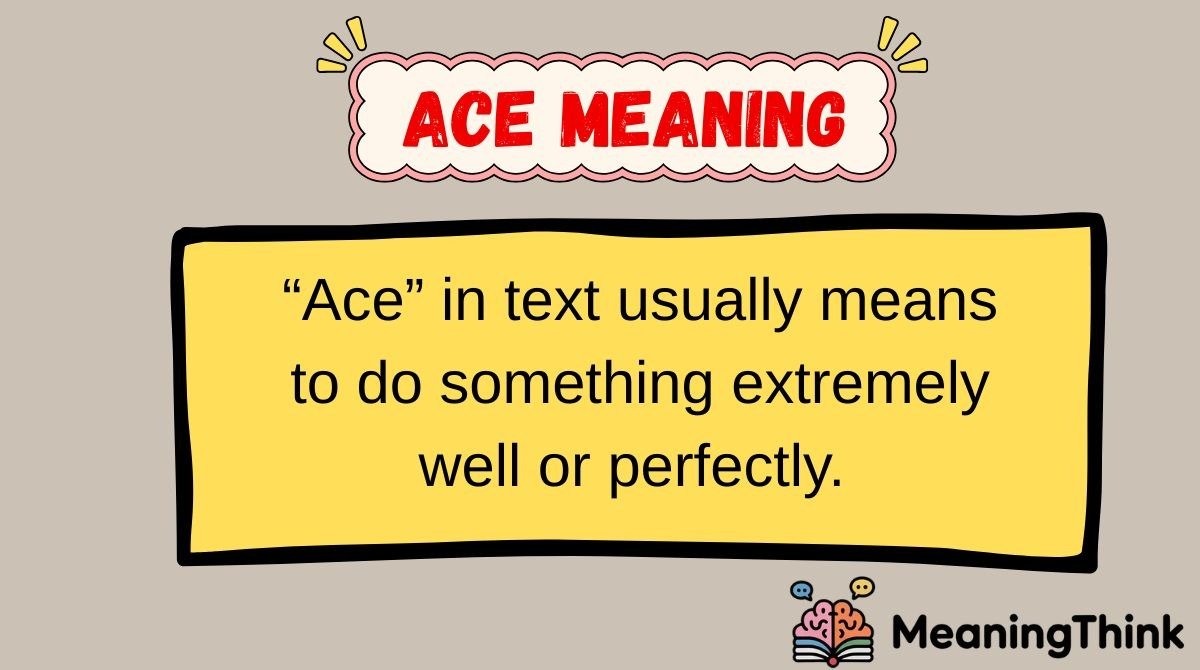
“Ace” in text usually means to do something extremely well or perfectly. It can also refer to someone who is highly skilled, or in some contexts, describe a person who identifies as asexual.
Secondary meanings include excellence, top performance, or a specific identity depending on context.
Detailed Meaning Breakdown
Primary Meaning
The most common meaning of “ace” in text is to succeed perfectly or perform exceptionally well.
Example:
- “I aced my exam” = I did very well, likely close to perfect.
It carries a strong positive tone. It’s not just “good”—it’s excellent.
Secondary Meanings
- Highly Skilled Person
- “She’s an ace at coding” = She is very skilled.
- Cool / Impressive Reaction
- “Ace!” = That’s awesome or great.
- Top Rank or Expert
- Used to describe someone at the highest level in a field.
Rare Meaning
Asexual Identity (Ace)
In some conversations, especially online communities, “ace” refers to a person who identifies as asexual (experiences little or no sexual attraction).
Example:
- “I’m ace” = I identify as asexual.
Context is critical here to avoid confusion.
What “Ace” Means in Different Situations
Everyday Texting
In casual chats, “ace” usually means success or doing great.
- “I aced the interview!”
- “You’ll ace it, don’t worry.”
Tone: Positive, encouraging, confident.
Social Media Platforms
On platforms like Instagram, TikTok, or X:
- “Ace!” = Approval or praise
- “That was ace” = That was really good
It often replaces words like “awesome” or “perfect.”
Dating & Relationships
Here, meaning depends heavily on context:
- “You’ll ace the date” = You’ll do great
- “I’m ace” = Could mean asexual identity
Misunderstanding can happen if context isn’t clear.
Professional Communication
In work-related messages:
- “She aced the presentation” = She performed very well
However, using “ace” casually in formal emails may feel too informal.
Cultural or Regional Differences
- In British English, “ace” often means excellent or cool
- “That movie was ace”
- In American English, it more commonly refers to performance or success
Psychological & Tone Analysis
Why People Use It
People use “ace” because it’s:
- Short and powerful
- Positive and motivating
- Easy to understand in context
What It Signals Socially
Using “ace” signals:
- Confidence
- Approval
- Encouragement
- Admiration
It often reflects a supportive tone in conversation.
Emotional Layer Behind It
“Ace” carries:
- Pride (self-use: “I aced it”)
- Support (others: “You’ll ace it”)
- Excitement (reaction: “Ace!”)
It feels stronger than “good” but less formal than “excellent.”
15 Real Conversation Examples (Explained)
- “I aced my math test!”
- Means perfect or near-perfect performance.
- “You’ll ace the interview.”
- Encouragement and confidence in someone.
- “That was ace!”
- Expression of approval.
- “He’s an ace at football.”
- Highly skilled person.
- “I hope I ace this exam.”
- Desire for excellent performance.
- “She totally aced that speech.”
- Strong praise.
- “Ace work, team!”
- Group appreciation.
- “I didn’t ace it, but I did okay.”
- Comparison with high standard.
- “You always ace everything.”
- Compliment for consistency.
- “That outfit is ace.”
- Stylish or impressive.
- “He’s an ace driver.”
- Expert-level ability.
- “I finally aced the level!”
- Success in gaming context.
- “Ace, let’s do it.”
- Agreement with enthusiasm.
- “I’m ace.”
- Could mean feeling great OR identity (context matters).
- “That idea is ace.”
- Approval of suggestion.
When “Ace” Can Be Misunderstood
Context Confusion
“Ace” could mean:
- Success
- Skill
- Identity
Without context, the meaning may be unclear.
Generational Gap
- Younger users may understand identity meaning
- Older users may only think of performance
Platform Differences
- Gaming: Skill or achievement
- Social media: Praise
- Identity discussions: Asexual meaning
Similar Words, Symbols, or Abbreviations
- Pro – Highly skilled person
- Expert – Advanced level of ability
- Awesome – Very impressive
- Perfect – Flawless result
- Win – Success or victory
- Slay – Did extremely well (slang)
- Nailed it – Did perfectly
- Top-tier – High quality
- Elite – Best of the best
- Legend – Highly admired person
When Not to Use “Ace”
Professional Risks
Avoid in:
- Formal emails
- Academic writing
It may sound too casual.
Cultural Risks
In some cultures, slang like “ace” may not be widely understood.
Tone Risks
- Can sound overconfident if used about yourself too often
- Might feel vague in serious conversations
Expert Tips for Using “Ace” Correctly
- Match the context
Use it for success, skill, or praise—not serious topics. - Know your audience
Friends = fine, workplace = use carefully. - Avoid overuse
Repeating it reduces impact. - Clarify when needed
Especially if referring to identity. - Use for encouragement
“You’ll ace it” is highly motivating. - Keep tone natural
Don’t force it into every message. - Pair with specifics
“You aced the presentation” is clearer than “ace.”
FAQs
What does “ace” mean in texting?
It usually means doing something extremely well or perfectly.
Does “ace” mean cool or awesome?
Yes, especially in casual or British usage.
What does “I’m ace” mean?
It can mean feeling great or identifying as asexual—context matters.
Is “ace” a compliment?
Yes, it’s a strong compliment indicating excellence or skill.
Can “ace” be used professionally?
It can, but it’s better in informal workplace communication.
What is the origin of “ace”?
It comes from playing cards, where an ace is the highest or most valuable card.
Is “ace” slang?
Yes, in many contexts it’s considered informal slang.
How do I respond to “you’ll ace it”?
You can say “Thanks!” or “I hope so!”—it’s encouragement.
Final Summary
“Ace” is a simple word with powerful meaning. Most of the time, it signals success, skill, or strong approval. But context is everything. It can also refer to identity or carry different tones depending on where and how it’s used.
To use it smartly:
- Keep it casual
- Match the situation
- Be aware of alternative meanings
When used correctly, “ace” makes your communication more confident, supportive, and expressive. It’s a small word—but it delivers a big impact.