You’re texting a friend, and suddenly they reply with “🤠”. No words—just that emoji. Are they joking? Being friendly? Acting confident? Or something else entirely?
This simple cowboy emoji can create confusion because it doesn’t have just one fixed meaning. Its tone depends heavily on context, personality, and even the platform being used.
What looks playful to one person might feel sarcastic or awkward to another.
In today’s fast-paced digital communication, emojis often carry more emotional weight than words. Misreading one can easily lead to misunderstandings, especially in casual chats, social media comments, or even dating conversations.
This guide breaks down exactly what 🤠 means in text, when to use it, and how to interpret it correctly. By the end, you’ll understand its tone, hidden signals, and how to use it confidently without sending the wrong message.
Quick Definition of “🤠 meaning in text”
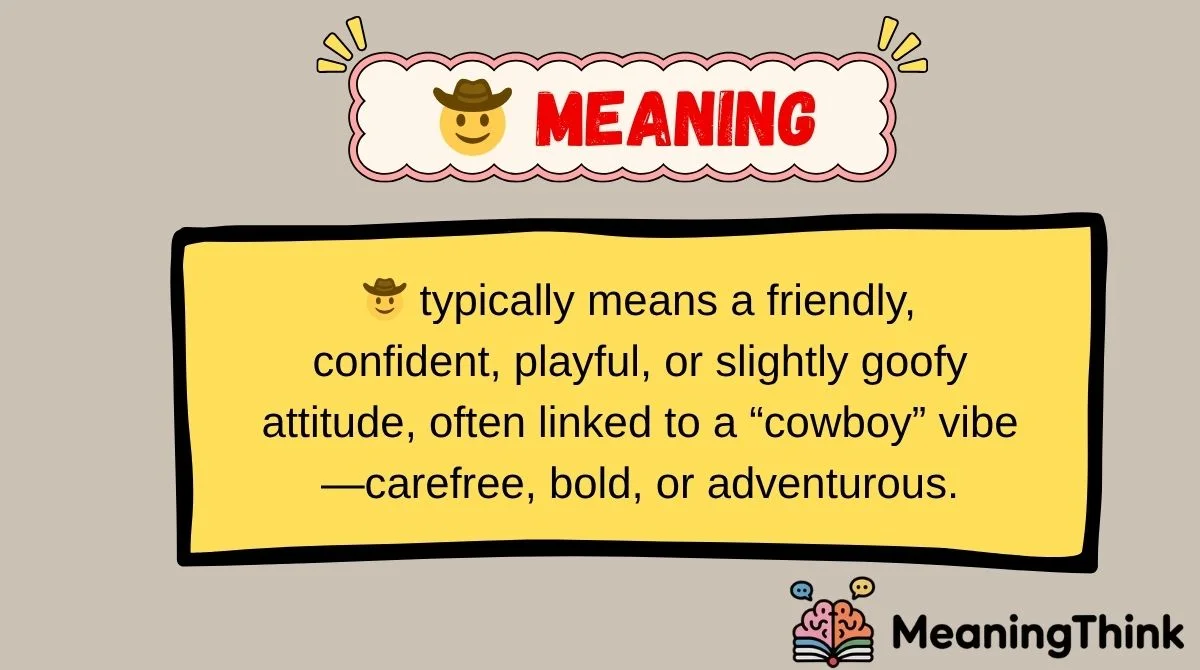
🤠 typically means a friendly, confident, playful, or slightly goofy attitude, often linked to a “cowboy” vibe—carefree, bold, or adventurous.
It can also signal sarcasm, forced positivity, or awkward humor depending on context.
Detailed Meaning Breakdown
Primary Meaning
At its core, 🤠 represents a cheerful and confident tone. It gives off a relaxed, “all good here” feeling. People use it to show they’re easygoing, upbeat, or handling things smoothly.
Example tone:
- “I’ve got this 🤠” → Confident but casual
Secondary Meanings
- Playful Humor
It adds a light, joking tone to messages. - Goofy or Silly Personality
Used when someone doesn’t want to sound too serious. - Sarcasm or Irony
Sometimes it softens a sarcastic comment. - Fake Positivity
It can signal “I’m fine” when things aren’t actually fine.
Rare Meanings
- Country/Western identity
Used by people referencing cowboy culture or rural lifestyle. - Mild teasing
Can be used in a joking, slightly mocking way.
What “🤠 meaning in text” Means in Different Situations
Everyday Texting
In casual chats, 🤠 usually means:
- “I’m good”
- “No worries”
- “I’m chill about it”
It keeps the tone light and friendly.
Social Media Platforms
On platforms like Instagram, TikTok, or X:
- It often adds humor or irony
- Sometimes used in memes
- Can indicate “trying too hard but owning it”
Example:
- “Just failed my exam 🤠” → humorous pain
Dating & Relationships
In romantic contexts, 🤠 can mean:
- Playful flirting
- Acting cool or confident
- Avoiding emotional seriousness
Example:
- “Guess I miss you a little 🤠” → soft vulnerability masked with humor
Professional Communication
Rarely appropriate, but if used:
- It makes the tone informal
- Can signal friendliness or casual confidence
However, it may look unprofessional if overused.
Cultural or Regional Differences
- In Western cultures, it may reflect cowboy imagery
- In global texting, it’s mostly interpreted as playful confidence
- Younger users tend to use it more ironically than older users
Psychological & Tone Analysis
Why People Use It
- To reduce seriousness
- To soften statements
- To avoid sounding too emotional
- To appear relaxed and confident
What It Signals Socially
- “I’m easygoing”
- “I’m not stressed”
- “I’m joking (maybe)”
It can also signal self-awareness—especially when used ironically.
Emotional Layer Behind It
🤠 often hides subtle emotions:
- Nervousness disguised as confidence
- Disappointment masked as humor
- Awkwardness softened with playfulness
It’s a “safe” emoji—it protects the sender from sounding too intense.
15 Real Conversation Examples (Explained)
- “Finished all my work 🤠”
→ Calm confidence, maybe slight pride - “Yeah I totally forgot 🤠”
→ Light apology with humor - “Got rejected again 🤠”
→ Masking disappointment with sarcasm - “I’ll handle it 🤠”
→ Confident and reassuring - “No big deal 🤠”
→ Downplaying something - “Sure… sounds great 🤠”
→ Possible sarcasm - “Just woke up at 3 PM 🤠”
→ Self-aware humor - “Guess I’m doing this alone 🤠”
→ Mild frustration but playful tone - “That was embarrassing 🤠”
→ Laughing at oneself - “I tried my best 🤠”
→ Accepting outcome with positivity - “You forgot again 🤠”
→ Light teasing - “Everything’s fine 🤠”
→ Possibly not fine (ironic tone) - “Let’s goooo 🤠”
→ Excitement and hype - “I’m just vibing 🤠”
→ Relaxed and carefree - “Oops 🤠”
→ Casual mistake acknowledgment
When “🤠 meaning in text” Can Be Misunderstood
Context Confusion
Without context, it’s unclear whether it’s:
- Serious
- Sarcastic
- Playful
Generational Gap
- Younger users: often ironic or sarcastic
- Older users: more literal (happy or friendly)
Platform Differences
- TikTok: ironic humor
- WhatsApp: genuine friendliness
- Work chats: potentially confusing or inappropriate
Similar Words, Symbols, or Abbreviations
- 🙂 – Simple friendliness
- 😎 – Cool confidence
- 😂 – Strong humor or laughter
- 🤡 – Self-mockery or embarrassment
- 😅 – Awkward relief
- 🐸 (“it is what it is”) – Acceptance humor
- 👍 – Agreement or approval
- 😬 – Nervous or uncomfortable
- 😏 – Flirty or smug tone
- 🙃 – Sarcasm or upside-down humor
When Not to Use “🤠 meaning in text”
Professional Risks
- Can seem unprofessional in emails or formal chats
- May reduce credibility
Cultural Risks
- Not everyone understands emoji tone
- Could confuse international audiences
Tone Risks
- May come across as sarcastic when you don’t intend it
- Could seem dismissive in serious conversations
Example:
- Using 🤠 during a serious discussion can feel insensitive
Expert Tips for Using “🤠 meaning in text” Correctly
- Match the tone of the conversation
Don’t use it in serious or emotional discussions. - Use it with people who understand your style
Friends will interpret it better than strangers. - Avoid overusing it
Too many emojis reduce clarity. - Pair it with clear text if needed
Example: “All good, don’t worry 🤠” - Be careful with sarcasm
Not everyone catches it. - Use it to soften messages, not replace them
Emojis support meaning—they shouldn’t carry it alone. - Know your platform
Casual platforms = safe
Professional platforms = risky
FAQs
What does 🤠 mean in texting?
It usually means a relaxed, confident, or playful attitude. It can also suggest humor or mild sarcasm depending on context.
Is 🤠 a sarcastic emoji?
Sometimes. It can be used sarcastically, especially when paired with negative or ironic statements.
What does 🤠 mean from a girl?
It often shows playful confidence, humor, or emotional lightness. Context matters more than gender.
What does 🤠 mean from a guy?
Typically signals chill confidence, joking tone, or casual friendliness.
Is 🤠 flirty?
It can be lightly flirty, especially in relaxed or teasing conversations.
Why do people use 🤠 ironically?
To mask real emotions like disappointment or awkwardness while keeping the tone light.
Is 🤠 a positive emoji?
Mostly yes, but it can carry hidden sarcasm or irony.
Should I use 🤠 in professional messages?
Generally no. It’s too informal and may confuse or weaken your message.
Final Summary
The 🤠 emoji is a flexible, tone-shaping tool in modern texting. At its core, it represents confidence, friendliness, and playfulness—but its real meaning depends on context.
It can:
- Add humor
- Soften messages
- Hide emotions
- Signal sarcasm
The key to using it well is awareness. Always consider who you’re talking to, the platform you’re on, and the tone you want to convey.
Used correctly, 🤠 makes your communication feel natural and expressive. Used carelessly, it can confuse or mislead.
When in doubt, keep it simple—and let your words do most of the work.