In the fast-paced world of texting and online messaging, acronyms and abbreviations have become a language of their own. You may have come across “slm” in a conversation and felt confused.
Is it a typo? A greeting? Or something else entirely? With so many interpretations floating around, it’s easy to misunderstand what someone is really trying to say.
Misreading a small abbreviation can even change the tone of a conversation.
This guide aims to clear up all confusion about “slm.” We’ll explore its primary meaning, secondary uses, and rare interpretations.
You’ll also discover real-life examples, psychological insights, potential pitfalls, and tips to use it correctly. By the end, you’ll not only understand “slm” but also feel confident using it across texting apps, social media, dating platforms, and even professional communication.
Quick Definition of “slm”
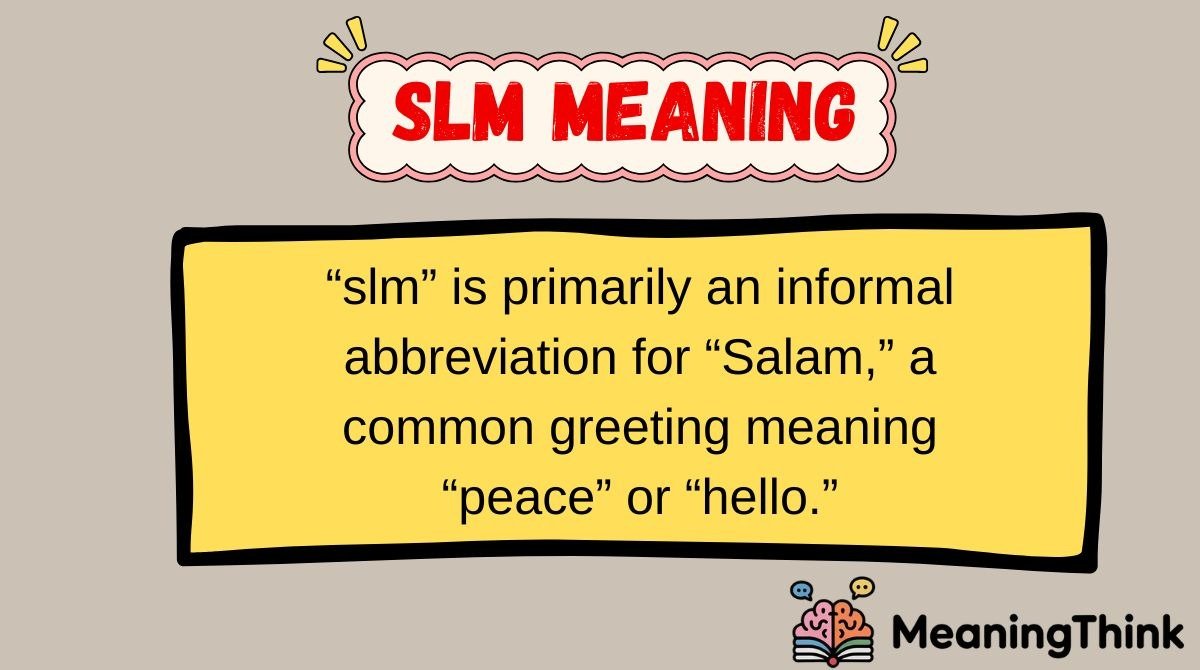
“slm” is primarily an informal abbreviation for “Salam,” a common greeting meaning “peace” or “hello.” It is widely used in texting and social media among Arabic, Turkish, and some multilingual communities. Secondary meanings include shorthand for specific technical terms, project codes, or even casual slang in niche circles. Rarely, it can appear as an acronym in professional or gaming contexts.
Detailed Meaning Breakdown
Primary Meaning:
The most common interpretation of “slm” is derived from “Salam”, which originates from Arabic. Salam literally translates to “peace,” and is often used as a friendly greeting equivalent to “hi” or “hello.” In digital messaging, typing “slm” instead of the full word saves time and aligns with the informal tone of chat-based communication.
Secondary Meanings:
- Social & Professional Acronyms: In some professional or technical environments, “SLM” can stand for “Service Level Management,” “Selective Laser Melting,” or other context-specific abbreviations.
- Internet Slang or Gaming: Certain online gaming or niche forums may adopt “slm” to signify a short-form expression unrelated to greetings, but these uses are far less common.
Rare Meanings:
Occasionally, “slm” may appear in code names, project identifiers, or internal abbreviations in specific organizations. These instances are usually contextual and unlikely to appear in general texting.
What “slm” Means in Different Situations
Everyday Texting
In casual texting, “slm” almost always functions as a friendly greeting. For example:
- Person A: slm!
- Person B: slm, how are you?
It’s quick, informal, and widely recognized among users familiar with Arabic or Turkish greetings.
Social Media Platforms
On platforms like Instagram, Facebook, or WhatsApp, “slm” is used to start conversations or respond to messages. It signals friendliness while maintaining brevity. Emojis may accompany it, e.g., “slm 😊,” adding warmth or context.
Dating & Relationships
In dating chats, “slm” conveys approachability. It’s less formal than “hello” but polite enough to express interest. It can soften the initial impression without seeming overly casual.
Professional Communication
In professional contexts, “slm” is rarely appropriate unless used among colleagues familiar with the abbreviation. Using it in official emails or LinkedIn messages can appear unprofessional or confusing.
Cultural or Regional Differences
- Arabic-speaking countries: Universally understood as a greeting.
- Turkey: Common in casual texting.
- Western countries: Recognition depends on the recipient’s exposure to Arabic or Turkish online culture.
Psychological & Tone Analysis
People use “slm” for several psychological and social reasons:
- Efficiency: It’s a quick way to acknowledge someone without typing a full greeting.
- Informality: Signals a casual, friendly tone.
- Cultural identity: For Arabic or Turkish speakers, it may reinforce shared cultural norms.
- Emotional layer: Using “slm” often conveys warmth and approachability, creating a soft entry into conversation.
15 Real Conversation Examples (Explained)
- A: slm!
B: slm, long time no see.
Explanation: Typical friendly greeting, acknowledging past connection. - A: slm 😊
B: slm! How’s your day?
Explanation: Emoji adds friendliness and emotional nuance. - A: slm, are you coming tonight?
B: Yes, slm!
Explanation: Greeting integrated into logistical question. - A: slm bro, wassup?
B: slm! All good here.
Explanation: Informal tone; casual conversation among peers. - A: slm, happy birthday!
B: Thanks, slm!
Explanation: Greeting combined with celebratory message. - A: slm, just landed.
B: slm, safe travels!
Explanation: Common in messaging to check status. - A: slm, can you send the file?
B: slm, sure, sending now.
Explanation: Adds politeness to a task-oriented request. - A: slm everyone
B: slm!
Explanation: Group chat greeting; inclusive. - A: slm 😅 late reply
B: slm, no worries
Explanation: Greeting softens apology. - A: slm, new here
B: slm! Welcome!
Explanation: Used to create a friendly first impression. - A: slm, are you free tomorrow?
B: slm, yes I am.
Explanation: Efficient conversational entry. - A: slm from Turkey!
B: slm, nice to meet you!
Explanation: Cultural greeting introduction. - A: slm! Want to join the game?
B: slm, sure
Explanation: Casual online/gaming context. - A: slm, did you check the report?
B: slm, yes, looks good.
Explanation: Informal professional texting. - A: slm, missed you at lunch
B: slm, sorry, got held up
Explanation: Softens regret or apology in personal conversation.
When “slm” Can Be Misunderstood
- Context Confusion: Recipients unfamiliar with the abbreviation may think it’s a typo.
- Generational Gap: Older users or non-technical audiences may not recognize “slm.”
- Platform Differences: On formal platforms like LinkedIn or email, “slm” may appear unprofessional.
Similar Words, Symbols, or Abbreviations
- hi / hey – Standard English greetings.
- salaam – Full spelling of the Arabic greeting.
- sml – Sometimes confused with “slm,” shorthand for “so much love.”
- hru – “How are you?” abbreviation.
- gm / gn – “Good morning / good night.”
- yo – Casual English greeting.
- wassup – Slang for “what’s up?”
- asalaam – Variation of “salaam.”
- sl – Sometimes shorthand for “see later.”
- sal – Partial greeting abbreviation in some communities.
When Not to Use “slm”
- Professional Risks: In formal emails, business chats, or with unknown colleagues, it may seem careless.
- Cultural Risks: Some recipients may prefer the full spelling “Salam” or a different local greeting.
- Tone Risks: In sensitive situations, using a casual abbreviation may be misinterpreted as dismissive.
Expert Tips for Using “slm” Correctly
- Use with audiences familiar with texting or social media abbreviations.
- Avoid in formal or professional contexts unless previously established.
- Pair with emojis for warmth when appropriate.
- Do not use as the sole message; add context to avoid confusion.
- Recognize cultural variations and adapt accordingly.
- Use in group chats for friendly inclusivity.
- Refrain from using in critical communications where tone matters.
- Combine with follow-up questions to encourage dialogue.
FAQs
What does “slm” stand for in text?
slm is primarily short for “Salam”, a greeting meaning “peace” or “hello.” Secondary meanings exist in technical, gaming, or professional contexts.
Is “slm” informal or formal?
slm is informal and best suited for texting, social media, and casual conversations.
Can “slm” be used professionally?
Rarely. Only appropriate in professional contexts if the recipient understands the abbreviation.
How is “slm” pronounced?
Typically pronounced as “salam”, or simply spelled out as the letters S-L-M.
Does “slm” have a cultural meaning?
Yes, it conveys peace and friendliness and is rooted in Arabic and Turkish culture.
Is “slm” the same as “sml”?
No. sml can mean “so much love” or other abbreviations, whereas slm is a greeting.
Can “slm” be misunderstood?
Yes, particularly across generations, cultures, or platforms unfamiliar with the abbreviation.
Are emojis recommended with “slm”?
Yes, they enhance warmth and clarify tone, e.g., “slm 😊.”
Final Summary
“slm” is a versatile, friendly abbreviation primarily representing the greeting “Salam.” Its use is widespread in texting, social media, and informal communication, carrying warmth and approachability.
However, context matters: overuse or misapplication can lead to misunderstandings, especially in professional or cross-cultural settings.
By understanding the meanings, contexts, emotional tones, and cultural nuances of “slm,” you can confidently incorporate it into your messaging.
Use it with clarity, pair it with friendly cues like emojis when needed, and always consider your audience. Doing so will help your communication remain both efficient and socially intelligent.