You’re texting someone late at night. The conversation is flowing, and suddenly they reply with “pnd.” You pause. Is it a typo? A slang word? Something serious? You check again—but the meaning still isn’t clear.
This is a common problem in modern communication. Short forms and abbreviations change fast, and “pnd” is one of those terms that can mean very different things depending on context.
Without the right understanding, you might misread the tone or respond incorrectly.
In this guide, you’ll get a clear and complete explanation of what “pnd” means in text.
We’ll break down its meanings, show how it’s used in real conversations, and explain when to use it—and when not to. By the end, you’ll be able to read and use “pnd” with full confidence.
Quick Definition of “PND”
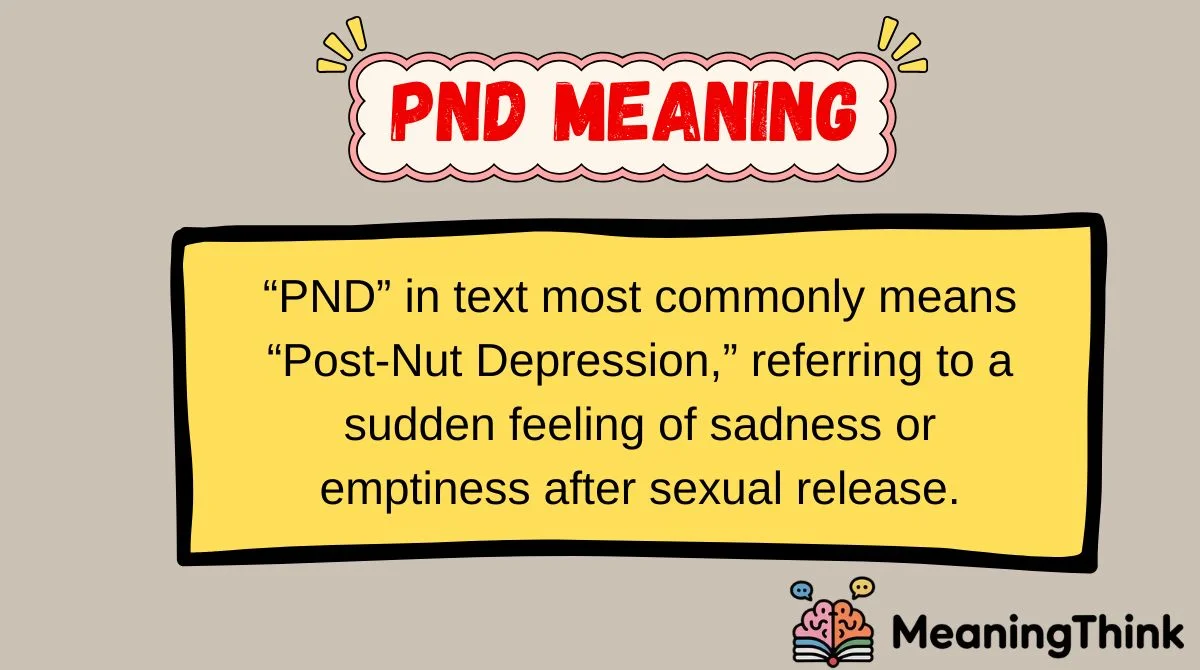
“PND” in text most commonly means “Post-Nut Depression,” referring to a sudden feeling of sadness or emptiness after sexual release.
It can also mean other things depending on context, such as “Pending” (waiting or not finalized) or “Payable on Demand” in formal or financial settings.
Detailed Meaning Breakdown
Primary Meaning: Post-Nut Depression
The most common modern use of “pnd” in texting—especially among younger users—is “Post-Nut Depression.” This refers to a temporary emotional drop after sexual activity. People use it casually, often jokingly, to describe feeling empty, tired, or reflective.
Example tone:
- Humor
- Self-awareness
- Emotional honesty (sometimes)
Secondary Meaning: Pending
In professional or neutral conversations, “pnd” may stand for “pending.” This means something is not complete yet or still waiting for approval.
Example:
- “Your request is pnd approval.”
This version is more common in emails, workplace chats, or task updates.
Rare Meaning: Payable on Demand
In finance or banking contexts, “pnd” can mean “Payable on Demand.” This is a formal term used in documents, not casual conversation.
What “PND” Means in Different Situations
Everyday Texting
In casual chats, “pnd” almost always means Post-Nut Depression. It’s used jokingly or to express a quick emotional shift.
Example:
- “Bro I got pnd 😭”
Tone: informal, humorous, sometimes slightly vulnerable.
Social Media Platforms
On platforms like TikTok, Twitter, or Reddit, “pnd” is often used in memes or relatable posts.
Example:
- “That moment when pnd hits instantly.”
Tone: relatable, exaggerated, meme-driven.
Dating & Relationships
In dating conversations, “pnd” can signal emotional distance after intimacy. It might be used jokingly—or seriously.
Example:
- “I think I got pnd after last night.”
Tone: depends on context—can be playful or emotionally revealing.
Professional Communication
In work-related contexts, “pnd” usually means “pending.” It’s used in a neutral, formal way.
Example:
- “The invoice is pnd review.”
Tone: neutral, concise.
Cultural or Regional Differences
In some regions or older age groups, “pnd” may not be recognized at all—or may only be understood as “pending.” Younger users are far more likely to use the slang meaning.
Psychological & Tone Analysis
Why People Use It
People use “pnd” because:
- It’s short and easy to type
- It captures a complex feeling quickly
- It fits meme culture and humor
What It Signals Socially
Using “pnd” can signal:
- You’re familiar with internet slang
- You’re comfortable discussing personal topics casually
- You’re part of a younger or online-savvy group
Emotional Layer Behind It
Even when used as a joke, “pnd” can reflect:
- Emotional vulnerability
- Self-reflection
- Sudden mood changes
It’s often humor used to mask or soften real feelings.
15 Real Conversation Examples (Explained)
- “Man I got pnd again 😭”
→ Expressing post-intimacy sadness in a humorous way. - “Why does pnd hit so hard?”
→ Reflecting on emotional changes after intimacy. - “Lol pnd kicking in already”
→ Light, joking tone about mood shift. - “Sorry, your request is pnd approval.”
→ Professional use meaning “pending.” - “I’ll check it later, it’s pnd.”
→ Task not completed yet. - “That movie gave me pnd vibes.”
→ Using it loosely to describe emotional emptiness. - “Bro pnd is real 😅”
→ Casual agreement with shared experience. - “Everything is pnd until Monday.”
→ Work-related delay. - “She said she feels pnd after hookups.”
→ Emotional insight in a relationship context. - “Pnd after scrolling all night 😩”
→ Extended meaning—feeling empty after activity. - “Still pnd, not texting anyone today.”
→ Withdrawal after emotional drop. - “Report status: pnd.”
→ Short professional update. - “Why does pnd feel like regret?”
→ Deeper emotional interpretation. - “I thought it was love but it was just pnd.”
→ Self-awareness and humor. - “Everything looks different after pnd.”
→ Reflective or philosophical tone.
When “PND” Can Be Misunderstood
Context Confusion
If someone says “pnd,” you may not know which meaning they intend. In casual chat, it’s likely slang. In work chat, it’s likely “pending.”
Generational Gap
Older users may:
- Not understand “Post-Nut Depression”
- Assume it means something formal
This can lead to awkward or confusing interactions.
Platform Differences
On LinkedIn or email:
- “pnd” = pending
On TikTok or Snapchat:
- “pnd” = Post-Nut Depression
Always consider the platform before interpreting.
Similar Words, Symbols, or Abbreviations
- LOL – Laughing out loud
- BRB – Be right back
- IDK – I don’t know
- IMO – In my opinion
- TMI – Too much information
- NSFW – Not safe for work
- FOMO – Fear of missing out
- SMH – Shaking my head
- ICYMI – In case you missed it
- TBH – To be honest
These abbreviations, like “pnd,” rely heavily on context.
When Not to Use “PND”
Professional Risks
Avoid using “pnd” to mean Post-Nut Depression in:
- Work emails
- Client messages
- Formal documents
It can appear unprofessional or inappropriate.
Cultural Risks
Not everyone is comfortable with slang related to intimacy. Using “pnd” in the wrong setting can:
- Offend others
- Create discomfort
Tone Risks
Even in casual chat, “pnd” can:
- Be misunderstood as serious sadness
- Come across as oversharing
Use it carefully based on your audience.
Expert Tips for Using “PND” Correctly
- Know your audience
Use slang only with people who understand it. - Match the platform
Keep slang for casual apps, not formal ones. - Clarify if needed
If there’s confusion, explain the meaning. - Avoid overuse
Using it too often reduces impact. - Watch tone
Make sure it fits the mood of the conversation. - Use humor carefully
Not everyone finds the topic funny. - Switch to “pending” in work settings
Stay professional when needed. - Be aware of timing
Some moments require sensitivity, not slang.
FAQs
What does PND mean in texting?
PND usually means “Post-Nut Depression” in casual texting, describing a temporary emotional drop after intimacy.
Can PND mean something else?
Yes, it can also mean “pending” in professional contexts or “payable on demand” in finance.
Is PND appropriate to use in chats?
It depends on the audience. It’s fine in casual chats but not in formal communication.
Why do people use PND as slang?
Because it’s short, expressive, and fits modern meme culture.
Is PND always about sadness?
Not always. It’s often used humorously, even if it refers to a real feeling.
How do I know which meaning is correct?
Look at the context—platform, tone, and topic of conversation.
Is PND commonly used worldwide?
It’s more common among younger, internet-savvy users globally.
Should I use PND in professional emails?
No. Use full words like “pending” instead.
Final Summary
“PND” is a small term with multiple meanings, but context makes everything clear. In most casual conversations, it refers to Post-Nut
Depression—a mix of humor and emotional expression. In professional settings, it simply means “pending.”
To use it correctly, always think about where you are, who you’re talking to, and what tone you want to set.
Slang like “pnd” can make communication feel natural and relatable—but only when used in the right setting.
Mastering these nuances helps you communicate clearly, avoid confusion, and stay socially aware in today’s fast-changing digital world.