If a friend texts “That story is cap” or comments “No cap!” under a social media post, you might wonder what they actually mean. The word “cap” has become one of the most common slang terms used online, in text messages, on TikTok, Instagram, Snapchat, and even in everyday conversations.
The confusion comes from the fact that “cap” does not mean a hat in most digital conversations. Instead, it usually means a lie, exaggeration, or something that is not true. Younger users often use it casually, while older generations may interpret it literally.
Understanding cap meaning in text is important because the term can completely change the meaning of a conversation. Someone saying “That’s cap” is calling a statement false, while “No cap” means they are being honest and serious.
This guide explains the exact meaning of cap in texting, social media, dating, and professional contexts, with real examples and practical usage tips so you can confidently understand and use the term in 2026.
Quick Definition of “Cap”
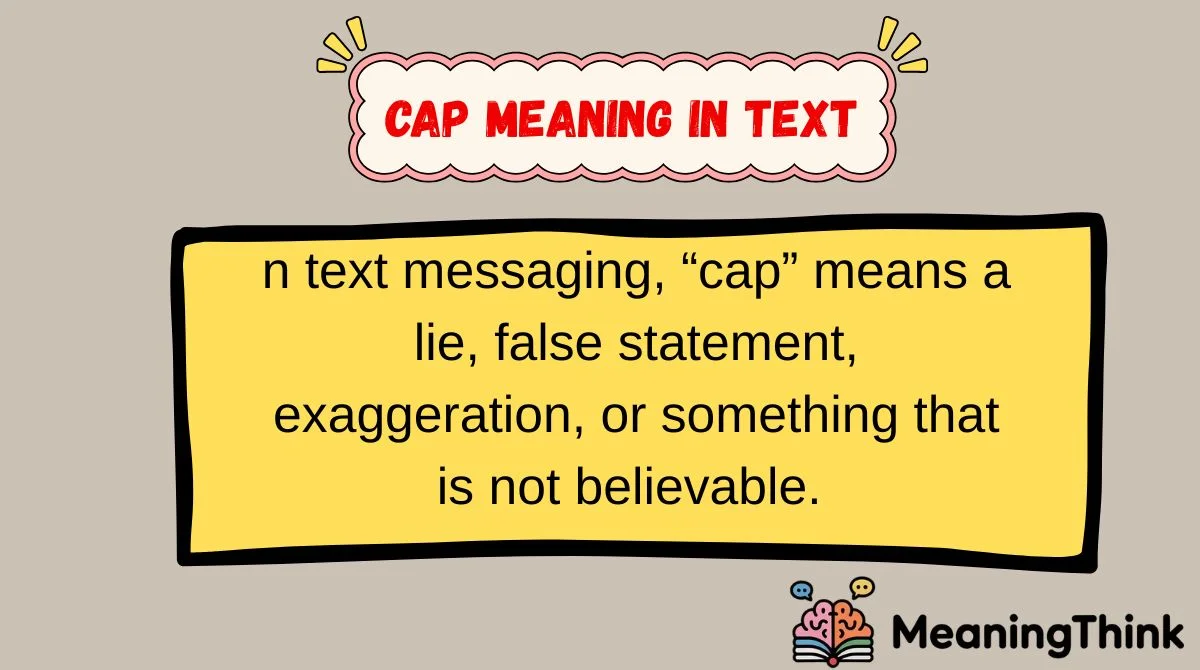
In text messaging, “cap” means a lie, false statement, exaggeration, or something that is not believable. When someone says “That’s cap”, they mean “That’s not true.” The phrase “No cap” means “I’m being completely honest” or “I’m serious.”
Secondary meanings include joking exaggeration, bragging that is hard to believe, or playful teasing among friends.
Detailed Meaning Breakdown
Primary Meaning: A Lie or False Statement
This is the most common meaning online.
“You met a celebrity yesterday?”
“Cap.”
Here, “cap” means “I don’t believe you.”
Secondary Meaning: Exaggeration
Sometimes the person may not be lying completely, but they are clearly exaggerating.
“I scored 1,000 points in one game.”
“That’s cap.”
“No Cap” Meaning
This phrase means “I’m telling the truth”.
“No cap, that was the best pizza I’ve ever had.”
Rare Meaning: Literal Cap
In some conversations, “cap” still means a hat or covering. Context makes the difference.
“I bought a new baseball cap.”
What “Cap” Means in Different Situations
Everyday Texting
Among friends, cap is often used playfully.
Text
Meaning
“You can run 100 miles?”
“That’s cap.”
“No cap, I’m exhausted.”
“I’m honestly exhausted.”
Social Media Platforms
On TikTok, Instagram, Snapchat, and X, the term is extremely common.
Examples:
- “Big cap” = obvious lie
- “No cap” = completely true
- “Stop capping” = stop lying
Dating & Relationships
In dating conversations, cap often questions sincerity.
“You say that to everyone.”
“No cap, I mean it.”
Here, the speaker is emphasizing honesty.
Professional Communication
Using cap in formal workplace communication is generally inappropriate.
Avoid
Better
“That report is cap.”
“That report appears inaccurate.”
“No cap, the project failed.”
“Honestly, the project failed.”
Cultural or Regional Differences
The slang became popular through African American Vernacular English (AAVE) and spread globally through music, sports culture, and social media. Younger English speakers in the US, UK, Canada, Australia, and many other countries now recognize the term.
Psychological & Tone Analysis
Why People Use “Cap”
- To challenge a claim quickly
- To sound casual and modern
- To show skepticism
- To participate in internet culture
What It Signals Socially
- “Cap” signals doubt.
- “No cap” signals sincerity.
- “Stop capping” signals disbelief.
Emotional Layer Behind It
The term can be playful, teasing, suspicious, or confrontational depending on tone. A friend saying “cap” with laughing emojis feels different from someone using it during an argument.
15 Real Conversation Examples (Explained)
1
“I finished the assignment in five minutes.”
“Cap.”
Explanation: The listener thinks the claim is false.
2
“No cap, that movie made me cry.”
Explanation: The speaker is being completely honest.
3
“You own three sports cars?”
“Big cap.”
Explanation: The statement is viewed as an obvious exaggeration.
4
“Stop capping.”
Explanation: Stop lying or exaggerating.
5
“No cap, I miss you.”
Explanation: A sincere emotional statement.
6
“That exam was easy.”
“Cap.”
Explanation: The listener disagrees strongly.
7
“No cap, I studied all night.”
Explanation: The speaker emphasizes truthfulness.
8
“You’re the best player here.”
“No cap?”
Explanation: Asking if the compliment is genuine.
9
“I can eat ten burgers.”
“That’s cap.”
Explanation: The claim seems unbelievable.
10
“No cap, this song is amazing.”
Explanation: A genuine opinion.
11
“You met the president?”
“Cap.”
Explanation: The listener does not believe the story.
12
“No cap, I’m proud of you.”
Explanation: A sincere supportive message.
13
“You ran a marathon yesterday?”
“Big cap.”
Explanation: Strong disbelief.
14
“I’m serious, no cap.”
Explanation: Reinforcing honesty.
15
“That whole story was cap.”
Explanation: The entire story is considered false.
When “Cap” Can Be Misunderstood
Context Confusion
Someone unfamiliar with internet slang may think you are talking about a hat.
Generational Gap
Teenagers and young adults often use cap naturally, while older adults may not recognize the slang meaning.
Platform Differences
Platform
Interpretation
TikTok
Usually slang
Snapchat
Usually slang
Instagram comments
Usually slang
Usually literal or unclear
Workplace chat
Potentially confusing
Similar Words, Symbols, or Abbreviations
| Term | Meaning |
|---|---|
| No cap | Honestly / seriously |
| Big cap | Obvious lie |
| Stop capping | Stop lying |
| FR | For real |
| NGL | Not gonna lie |
| TBH | To be honest |
| BS | Nonsense / false information |
| Fake | Not genuine |
| Lying | Not telling the truth |
| Exaggerating | Overstating something |
When Not to Use “Cap”
Professional Risks
- Business emails
- Job interviews
- Formal reports
- Client communication
Cultural Risks
Some international audiences may not understand the slang and could misinterpret your message.
Tone Risks
Calling someone’s statement “cap” can sound rude or accusatory if the conversation is serious.
Expert Tips for Using “Cap” Correctly
- Use “cap” mainly in casual conversations.
- Use “no cap” when emphasizing honesty.
- Avoid it in professional writing.
- Consider whether the other person understands internet slang.
- Use emojis if you are joking to avoid sounding aggressive.
- Do not overuse it in every message.
- Remember that “big cap” is stronger than “cap”.
- If clarity matters, use standard English instead.
FAQs
What does “cap” mean in a text message?
It usually means a lie, false statement, or exaggeration.
What does “no cap” mean?
“No cap” means “I’m being honest” or “I’m serious.”
Is “cap” a bad word?
No. It is slang, not profanity, although it can sound confrontational in some situations.
Why do people say “stop capping”?
They are telling someone to stop lying or exaggerating.
Can “cap” mean a hat?
Yes. The literal meaning still exists, so context is important.
Is “cap” used on TikTok and Instagram?
Yes. It is extremely common on TikTok, Instagram, Snapchat, and other social media platforms.
Should I use “cap” in a work email?
No. Use clear professional language instead.
What is the difference between “cap” and “big cap”?
“Cap” means something is false, while “big cap” means it is a very obvious or major lie.
Final Summary
The cap meaning in text is straightforward once you know the context. “Cap” means a lie, exaggeration, or something that is not believable. “No cap” means honesty, seriousness, or complete truthfulness.
This slang is most common in texting, social media, gaming, and casual conversations. It helps people express skepticism or emphasize sincerity quickly. However, it should generally be avoided in professional communication, formal writing, and situations where the audience may not understand internet slang.
If you are chatting with friends online, using cap and no cap can make your messages sound natural and current. If clarity is important, especially in business or academic settings, choose standard English instead.
Understanding this single slang term can help you decode countless conversations across TikTok, Instagram, Snapchat, and text messages in 2026.