You may have seen someone type “ho” in a chat and felt unsure about what it really means. Is it a joke, an insult, a slang word, or just random typing?
In today’s fast-moving digital conversations, short words like this often create confusion because they can change meaning depending on tone, platform, and who is using them.
For example, in one chat, “ho” might appear in a funny message between friends. In another, it might feel rude or offensive. On social media, it can even show up in memes or music lyrics, making its meaning even more complex.
This guide breaks everything down in simple language so you can clearly understand what “ho” means in text, how people use it, when it can be misunderstood, and how to respond correctly. By the end, you will have complete clarity and confidence in recognizing its meaning in any digital conversation.
Quick Definition of “ho”
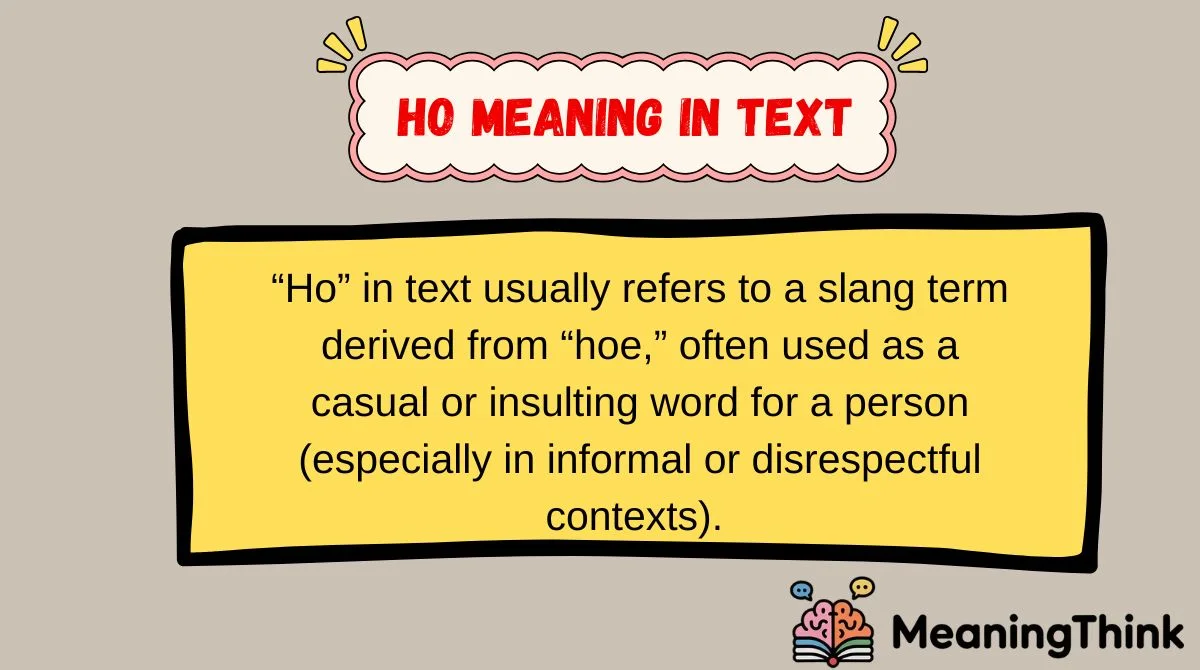
“Ho” in text usually refers to a slang term derived from “hoe,” often used as a casual or insulting word for a person (especially in informal or disrespectful contexts). It can also appear in playful expressions, jokes, or cultural phrases, but its primary meaning is slang-based and context-sensitive.
In some cases, it may also appear in non-slang contexts like expressions (“ho ho ho”) or stylized speech, where it carries no offensive meaning.
Detailed Meaning Breakdown
Primary Meaning
The most common meaning of “ho” in texting is slang. It is a shortened form of “hoe,” which is a derogatory term used to insult someone’s behavior, often implying promiscuity or disrespect. In many conversations, it is considered offensive depending on tone and intent.
However, younger users sometimes use it casually among friends without serious intent, which can reduce its harshness in certain groups.
Secondary Meanings
In different contexts, “ho” can also mean:
- A playful or joking expression between friends
- A stylized version of laughter or sound in memes (“ho ho ho” like Santa Claus)
- A phonetic expression in songs or chants
- Rarely, a shortened form used in informal typing with no meaning at all
Rare or Contextual Uses
In older literature or cultural expressions, “ho” can appear as an exclamation (e.g., “Ho there!” meaning “Hey!”). This usage is mostly outdated but still visible in historical content or storytelling.
What “ho” Means in Different Situations
Everyday Texting
In daily chats, “ho” is usually slang. It may be used:
- As an insult (negative tone)
- As a joking word between friends
- As part of a longer slang phrase
Tone is everything. The same word can feel funny or offensive depending on who says it.
Social Media Platforms
On platforms like TikTok, Instagram, or X (Twitter), “ho” often appears in:
- Memes
- Song lyrics
- Comment sections
- Viral jokes
In these spaces, it is sometimes used loosely without deep meaning, but it can still be offensive depending on context.
Dating & Relationships
In dating conversations, “ho” is usually negative. It may appear in arguments or jealousy-driven messages. It is not considered respectful language and can escalate conflicts quickly.
Professional Communication
In professional or workplace communication, “ho” should never be used. It is informal and can be interpreted as disrespectful or unprofessional.
Cultural or Regional Differences
- In Western slang, it is more commonly known as a rude insult.
- In some youth communities, it is used casually but still risky.
- In older or traditional cultures, it is generally considered offensive.
Psychological & Tone Analysis
People use “ho” for different emotional reasons:
- To insult or express anger
- To joke with friends in informal settings
- To show dominance or sarcasm in arguments
- To mimic slang from music or internet culture
Socially, it often signals:
- Informality
- Emotional intensity
- Lack of filtering in communication
- Group-based slang identity
Emotionally, it can carry aggression, humor, or exaggeration depending on tone.
15 Real Conversation Examples (Explained)
- “Don’t act like that, ho.”
- Used as an insult during an argument.
- “Haha chill ho, I was just joking.”
- Used playfully among friends.
- “She’s not that type of ho.”
- Judgmental or defensive tone.
- “Yo ho ho 😂”
- Meme-style pirate or Santa Claus expression.
- “Why you acting like a ho?”
- Offensive accusation.
- “That’s my ho 😂”
- Informal slang between close friends (can be offensive or joking depending on group).
- “Ho stop lying.”
- Casual insult in heated chat.
- “Ho ho ho Merry Christmas!”
- Festive, harmless usage.
- “You a ho fr?”
- Strong insult questioning character.
- “Bro stop calling her a ho.”
- Defense of someone being insulted.
- “We was just ho’ing around.”
- Slang joking expression (non-standard grammar).
- “Ho 😂 you funny.”
- Playful teasing.
- “She called me a ho for no reason.”
- Reporting insult.
- “That ho blocked me.”
- Informal and disrespectful reference.
- “Ho vibes only.”
- Meme-style or ironic slang usage.
When “ho” Can Be Misunderstood
Context Confusion
Without tone or emojis, “ho” can feel aggressive even if meant jokingly.
Generational Gap
Older users may see it as highly offensive, while younger users may use it casually.
Platform Differences
- On TikTok: often meme-based
- In SMS: more direct and personal
- On Twitter/X: can be sarcastic or argumentative
Similar Words, Symbols, or Abbreviations
- Hoe – Original slang form
- Bro – Casual friend term
- Dude – Neutral informal address
- Bae – Romantic slang
- LOL – Laughing expression
- LMAO – Strong laughter
- Bruh – Reaction word
- Sis – Friendly address for women
- Savage – Bold or rude behavior
- YOLO – Internet slang for “you only live once”
When Not to Use “ho”
- In professional emails or workplace chats
- With strangers where tone is unclear
- In academic or formal writing
- In cultures where slang is not accepted
- During arguments where escalation is possible
- In respectful or serious conversations
Using it in the wrong place can damage trust and create misunderstandings.
Expert Tips for Using “ho” Correctly
- Only use it with people who understand your slang style
- Avoid using it in serious conversations
- Never use it in professional settings
- Be careful with tone (text removes vocal clarity)
- Add emojis only if the context is clearly playful
- Do not use it to insult strangers
- Understand cultural sensitivity before using it
- When unsure, avoid it completely
FAQs
What does ho mean in text slang?
It is usually a slang or insulting term derived from “hoe,” depending on context.
Is ho a bad word?
Yes, in most contexts it is considered offensive or disrespectful.
Can ho be used jokingly?
Yes, but only among close friends who understand the humor.
What does ho ho ho mean in chat?
It usually refers to laughter or Santa Claus style expression.
Is ho used on social media?
Yes, often in memes, comments, and slang conversations.
Does ho have a positive meaning?
Rarely. It is mostly negative or playful depending on tone.
Why do people use ho in messages?
For slang expression, humor, or emotional reaction.
Should I use ho in professional chats?
No, it is not appropriate for professional communication.
Final Summary
The term “ho” in text is highly context-dependent but mostly comes from slang usage with a negative or insulting meaning.
While it can sometimes appear in playful or meme-based communication, its core meaning is still considered informal and potentially offensive.
Understanding tone, platform, and relationship between speakers is essential before interpreting or using it. In most situations, it is safer to avoid the word entirely unless you are sure of the social context.
Clear communication always works better than risky slang.