You’re chatting online, maybe on a gaming server or messaging app, and someone suddenly types: “asl?” You pause. Is it a typo? A joke? A code? This tiny three-letter acronym has confused millions of people—especially those who didn’t grow up in early internet chatrooms.
The truth is, “asl” has been around for decades, but its meaning has evolved. Depending on where and how it’s used, it can feel friendly, intrusive, outdated, or even completely misunderstood.
This guide breaks it all down in simple, clear language. You’ll learn what “asl” really means, how people use it today, when it’s appropriate—and when it’s not. By the end, you’ll be able to read, understand, and use “asl” confidently without second-guessing yourself.
Quick Definition of “ASL”
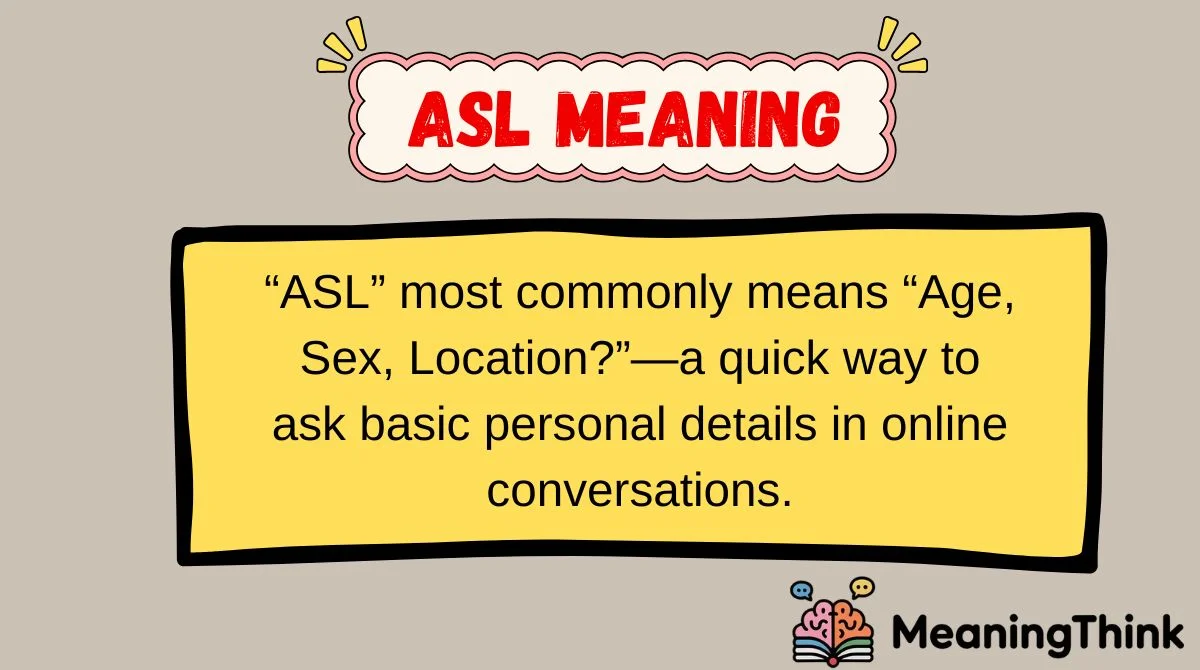
“ASL” most commonly means “Age, Sex, Location?”—a quick way to ask basic personal details in online conversations.
It’s often used in chats to get to know someone quickly.
Secondary meanings include “American Sign Language” and, less commonly, other niche interpretations depending on context.
Detailed Meaning Breakdown
Primary Meaning: Age, Sex, Location
The main meaning of “asl” comes from early internet chat culture. It’s a shorthand way of asking:
- How old are you?
- What is your gender?
- Where are you from?
Instead of typing full questions, users would simply say “asl?” to speed up conversations.
Secondary Meanings
- American Sign Language
In educational or accessibility contexts, “ASL” refers to the sign language used by the Deaf community in North America. - As Hell (slang variation)
Sometimes “asl” is used informally as shorthand for “as hell,” like:- “That’s funny asl” = “That’s very funny”
Rare Meanings
- Internal group slang or gaming shorthand (varies by community)
- Misuse or typo of other acronyms
What “ASL” Means in Different Situations
Everyday Texting
In modern texting, “asl” is less common than before but still appears occasionally.
- Often used jokingly or ironically
- Sometimes used by younger users who discovered it through memes
Example:
- “lol asl?” → playful or nostalgic tone
Social Media Platforms
On platforms like chat apps, forums, or comment sections:
- Can be used seriously in private chats
- Often used humorously in public spaces
- Sometimes considered outdated
Dating & Relationships
In dating contexts:
- It may feel too direct or even intrusive
- Modern users prefer softer questions like:
- “Where are you from?”
- “How old are you?”
Using “asl?” here can come off as impersonal or old-fashioned.
Professional Communication
In work or formal settings:
- “asl” should not be used
- It is considered informal and inappropriate
Always use full, respectful language instead.
Cultural or Regional Differences
- More common among older internet users (millennials, early Gen Z)
- Younger users may recognize it but rarely use it seriously
- In some regions, it may be completely unfamiliar
Psychological & Tone Analysis
Why People Use It
- Speed: It’s fast and efficient
- Habit: Long-time internet users are used to it
- Curiosity: Quick way to profile someone
What It Signals Socially
- Casual or informal tone
- Direct communication style
- Sometimes lack of social filtering
Emotional Layer Behind It
- Neutral in older contexts
- Can feel intrusive in modern settings
- Sometimes used humorously to mimic “old internet culture”
Tone depends heavily on context. The same “asl?” can feel friendly in one chat and awkward in another.
15 Real Conversation Examples (Explained)
- “Hey, asl?”
→ Direct request for personal info. Can feel abrupt. - “lol asl?”
→ Likely joking or nostalgic. - “asl before we continue?”
→ More polite but still direct. - “Not doing asl anymore 😂”
→ Rejecting old-style chat behavior. - “He asked asl right away…”
→ Often implies discomfort or awkwardness. - “asl? just curious”
→ Softens the tone slightly. - “That’s funny asl”
→ Means “as hell,” not “age/sex/location.” - “Do people still say asl?”
→ Meta-comment on outdated slang. - “asl or nah?”
→ Asking if sharing details is okay. - “Back in the day it was always asl first”
→ Referring to early internet culture. - “She replied ‘asl?’ and I was confused”
→ Shows generational gap. - “No asl, just vibes”
→ Rejecting personal questions. - “asl???”
→ Emphasizes urgency or confusion. - “He said asl and I left”
→ Indicates discomfort. - “asl still a thing?”
→ Questioning relevance today.
When “ASL” Can Be Misunderstood
Context Confusion
- Could mean “American Sign Language”
- Could mean “as hell”
- Could mean “age, sex, location”
Without context, it’s unclear.
Generational Gap
- Older users: normal
- Younger users: confusing or outdated
Platform Differences
- Gaming chats: more accepted
- Professional apps: inappropriate
- Social media: often ironic
Similar Words, Symbols, or Abbreviations
- DM – Direct message
- BRB – Be right back
- IDK – I don’t know
- TBH – To be honest
- IMO – In my opinion
- IRL – In real life
- HMU – Hit me up
- WYD – What are you doing
- ICYMI – In case you missed it
- FR – For real
These are modern shorthand alternatives that are more widely accepted today.
When Not to Use “ASL”
Professional Risks
- Comes across as unprofessional
- May seem immature
- Can damage credibility
Cultural Risks
- Some cultures value privacy highly
- Asking personal details too quickly can offend
Tone Risks
- Can feel intrusive or aggressive
- May make others uncomfortable
- Can end conversations quickly
Expert Tips for Using “ASL” Correctly
- Use it only in casual chats
Never in formal or work-related conversations. - Avoid using it with strangers immediately
Build rapport first. - Understand your audience
Older users may accept it more than younger ones. - Use humor carefully
It works best as a joke, not a serious opener. - Consider modern alternatives
Ask questions naturally instead. - Watch for context clues
Make sure your meaning is clear. - Respect privacy
Not everyone wants to share personal details quickly. - Avoid repetition
Don’t keep asking if someone ignores it.
FAQs
What does ASL mean in texting?
It usually means “Age, Sex, Location?”—a quick way to ask basic personal details in online chats.
Is ASL still used in 2026?
Yes, but mostly in a nostalgic or humorous way. It’s less common in serious conversations.
Does ASL always mean age, sex, location?
No. It can also mean “American Sign Language” or “as hell,” depending on context.
Is it rude to ask ASL?
It can feel intrusive, especially if asked too early or without context.
What is a better alternative to ASL?
Ask naturally, like:
- “Where are you from?”
- “How old are you?”
Why was ASL popular before?
Early chatrooms had limited typing speed, so short forms like “asl” saved time.
Can ASL mean something inappropriate?
Not directly, but asking “sex” can feel personal or uncomfortable.
Should I reply if someone asks ASL?
Only if you feel comfortable. You are not obligated to share personal details.
Final Summary
“ASL” is a classic piece of internet slang that once defined online conversations. While it originally meant “Age, Sex, Location,” its role has changed over time.
Today, it’s often used jokingly, nostalgically, or occasionally in casual chats.
The key to using it correctly is understanding context. What once felt normal can now feel too direct or outdated. Instead of relying on “asl,” modern communication favors more natural, respectful questions.
If you do use it, keep it light, casual, and appropriate to the situation. And if you see it, don’t panic—you now know exactly what it means and how to respond.
Clear communication always wins over shortcuts.