You’re texting someone, wrapping up the conversation, and suddenly they reply with “hagd.” You pause.
Is it friendly? Dismissive? Too casual? This small four-letter abbreviation can feel confusing if you’re not used to texting shorthand.
In today’s fast-paced digital communication, short forms like “hagd” are everywhere—especially in messaging apps, social media, and casual chats.
But understanding what they really mean depends on context, tone, and even your relationship with the person.
This guide breaks everything down clearly. You’ll learn exactly what “hagd” means, when to use it, when to avoid it, and how it can come across in different situations.
By the end, you’ll be able to use it confidently without sounding awkward or misunderstood.
Quick Definition of “hagd”
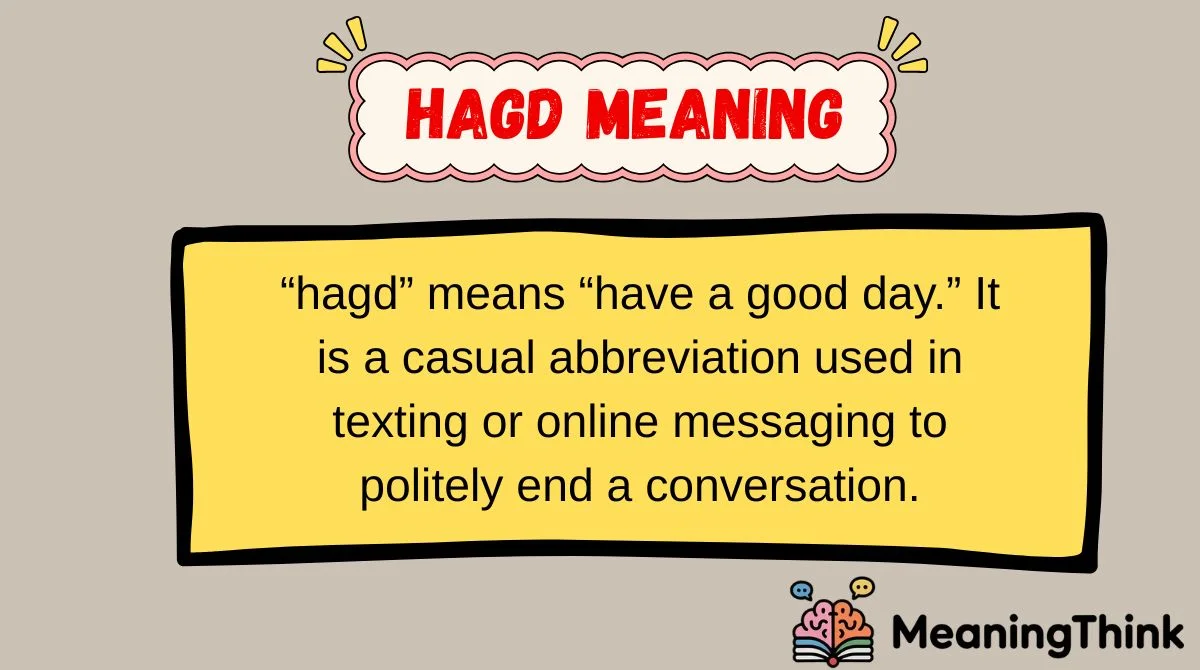
“hagd” means “have a good day.” It is a casual abbreviation used in texting or online messaging to politely end a conversation.
It can also carry slightly different tones depending on context—friendly, neutral, or even dismissive in rare cases.
Detailed Meaning Breakdown
Primary Meaning
The main meaning of “hagd” is simple:
- “Have a good day”
It’s typically used at the end of a conversation as a polite or friendly closing. It’s similar to saying:
- “Take care”
- “See you later”
- “Bye, have a nice day”
Example:
- “I’ll talk to you later, hagd!”
This signals that the conversation is ending on a positive note.
Secondary Meanings
While the core meaning stays the same, tone can shift:
- Friendly goodbye: Warm and polite
- Neutral closing: Just ending the chat
- Slightly distant: When used without emotion or context
Example:
- “Okay.” → cold
- “Okay, hagd.” → slightly softer
Rare Meanings
In rare cases, “hagd” can feel:
- Dismissive: If used abruptly after a disagreement
- Sarcastic: If paired with negative tone
Example:
- “Whatever, hagd.” → may sound passive-aggressive
What “hagd” Means in Different Situations
Everyday Texting
In daily chats, “hagd” is a simple and polite way to end a conversation.
Example:
- “I’m heading out now, hagd!”
Tone:
- Friendly
- Casual
- Light
Social Media Platforms
On platforms like Instagram or messaging apps, “hagd” is used in:
- Comments
- DMs
- Replies
Example:
- “Thanks for the help! hagd!”
Tone:
- Polite
- Quick
- Informal
Dating & Relationships
Here, tone matters more.
- Early dating: Can feel too casual or distant
- Close relationship: Totally normal
Example:
- “Goodnight, hagd ❤️” → warm
- “Ok hagd” → may feel cold
Professional Communication
In work settings, “hagd” is usually not appropriate.
Better alternatives:
- “Have a great day”
- “Best regards”
- “Take care”
Example:
- Avoid: “Thanks, hagd”
- Use: “Thank you, have a great day”
Cultural or Regional Differences
- Younger users: Use it often
- Older generations: May not recognize it
- Some cultures: Prefer full phrases over abbreviations
Psychological & Tone Analysis
Why People Use It
People use “hagd” because it is:
- Fast to type
- Polite but efficient
- Common in digital communication
What It Signals Socially
Using “hagd” can signal:
- You’re casual and relaxed
- You prefer quick communication
- You’re ending the conversation politely
Emotional Layer Behind It
Tone depends on how it’s used:
- “hagd 😊” → warm and friendly
- “hagd” → neutral
- “k hagd” → possibly cold
Small changes in wording and emojis affect meaning.
15 Real Conversation Examples (Explained)
- “I’ll catch up later, hagd!”
→ Friendly goodbye - “Thanks for your help, hagd!”
→ Polite appreciation - “I’m busy now, hagd.”
→ Neutral ending - “Ok hagd”
→ Slightly dry tone - “Alright, talk tomorrow, hagd 😊”
→ Warm and positive - “Whatever, hagd.”
→ Passive-aggressive tone - “Heading to class, hagd!”
→ Casual exit - “Nice talking to you, hagd”
→ Friendly closing - “Gotta go, hagd ❤️”
→ Affectionate tone - “Sure. hagd”
→ Minimal effort response - “See you soon, hagd!”
→ Cheerful - “I’ll think about it, hagd”
→ Slightly distant - “Good luck today, hagd!”
→ Supportive - “Ok, bye, hagd”
→ Redundant but friendly - “Fine. hagd.”
→ Possibly annoyed
When “hagd” Can Be Misunderstood
Context Confusion
Without tone indicators, it can feel:
- Friendly
- Cold
- Dismissive
Same word, different feelings.
Generational Gap
- Younger users: Understand instantly
- Older users: May feel confused or think it’s a typo
Platform Differences
- Text messages: Normal
- Emails: Unprofessional
- Work chats: Risky
Similar Words, Symbols, or Abbreviations
- GN – Good night
- TC – Take care
- BRB – Be right back
- TTYL – Talk to you later
- ILY – I love you
- GM – Good morning
- CU – See you
- XOXO – Hugs and kisses
- L8R – Later
- BBS – Be back soon
Each serves a similar role: quick communication.
When Not to Use “hagd”
Professional Risks
Avoid in:
- Emails
- Job applications
- Client communication
It may look unprofessional.
Cultural Risks
In formal cultures:
- Abbreviations may seem disrespectful
- Full sentences are preferred
Tone Risks
Avoid when:
- You’re resolving conflict
- You need to sound serious
- The message could be misinterpreted
Example:
- During an argument, “hagd” can sound dismissive
Expert Tips for Using “hagd” Correctly
- Use it only in casual conversations
- Add emojis to soften tone
- Avoid using it alone after serious discussions
- Match the other person’s texting style
- Use full phrases in professional settings
- Don’t overuse it—it can feel lazy
- Combine it with context for clarity
- Be mindful of emotional tone
FAQs
What does hagd stand for in texting?
It stands for “have a good day.” It’s a casual way to end a conversation politely.
Is hagd rude or polite?
It is generally polite, but tone depends on context. Without warmth, it can feel neutral or slightly cold.
Can I use hagd in professional emails?
No. It is too informal. Use full phrases like “Have a great day” instead.
Is hagd commonly used in 2026?
Yes. It remains widely used in casual texting and online chats.
What’s the difference between hagd and “have a good day”?
“hagd” is abbreviated and informal. The full phrase is more professional and clearer.
Can hagd be misunderstood?
Yes. Without tone indicators, it can seem dismissive or dry.
Do older people understand hagd?
Not always. Some may not recognize the abbreviation.
Should I use emojis with hagd?
Yes, if you want to sound friendly. Emojis add warmth and clarity.
Final Summary
“hagd” is a simple abbreviation that means “have a good day,” but its impact depends heavily on context and tone. In casual texting, it works well as a polite and quick way to end conversations.
However, in professional or sensitive situations, it can feel too informal or even dismissive.
The key is awareness. Think about who you’re talking to, the platform you’re using, and the tone you want to convey. Adding a small detail—like an emoji or a friendly phrase—can completely change how your message is received.
Use “hagd” when it fits the situation, and switch to full expressions when clarity and professionalism matter. With the right balance, you can communicate clearly, confidently, and without confusion.